AI Innovation for

Healthcare & Billing Efficiency

Watch Demo

Trusted by 50+ Healthcare Providers
/images/hippa.png/images/soc.png/images/hl7.png
Left Dashboard
Right Dashboard
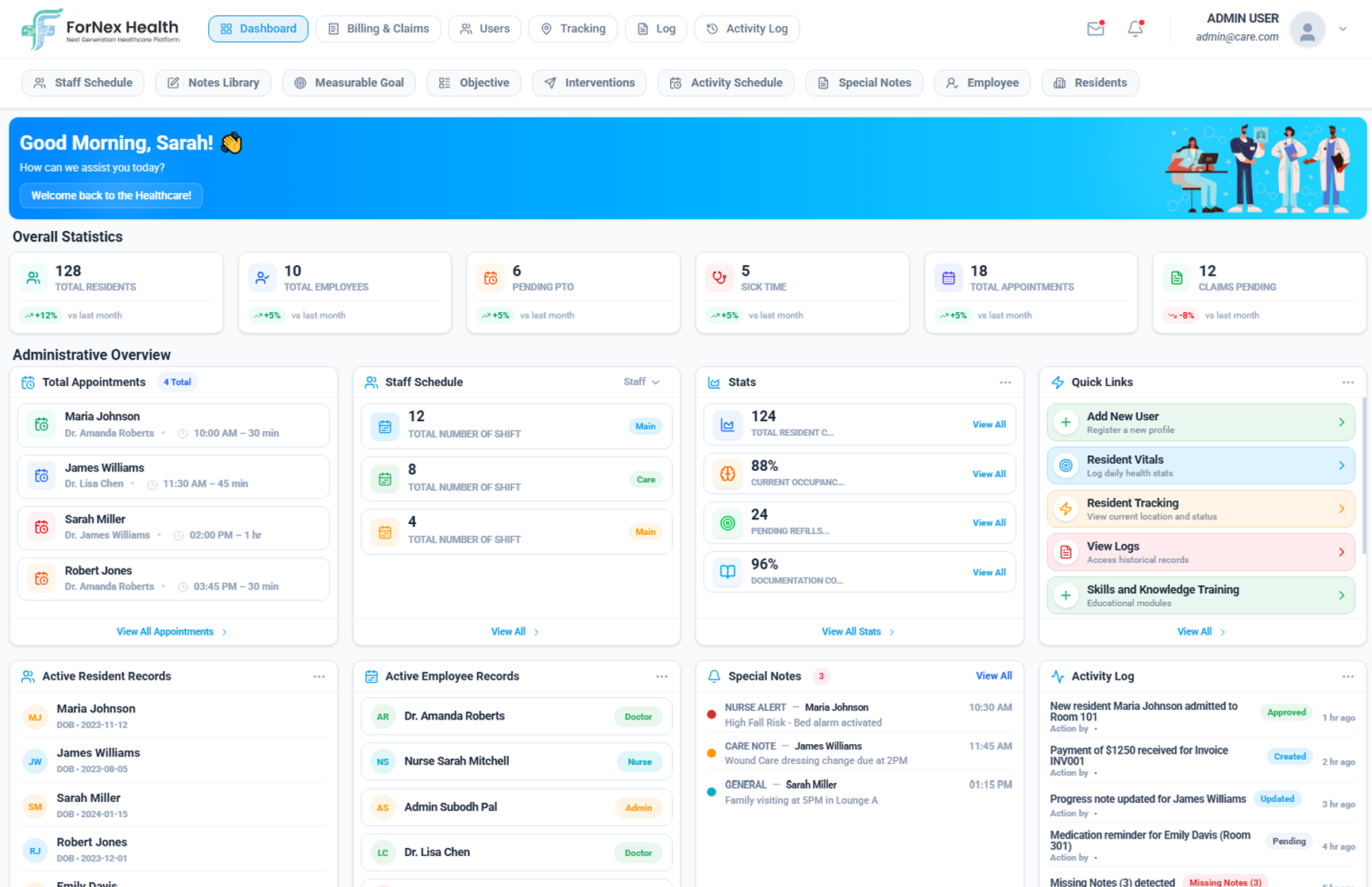
Main Dashboard

Health-Focused Development

Built exclusively for clinics, hospitals, and healthtech startups never generic, always clinical-grade.

Secure & Compliant Systems

HIPAA, GDPR, ONC and SOC2 compliant from day one no patches, no shortcuts.

Integration Expertise

Native integrations with Epic, Cerner & Athenahealth using FHIR R4 and HL7 standards.

AI-Powered Digital Solutions

Automated claim scrubbing, predictive denial management, and AI-assisted charting built in, not bolted on.

Health support

Results built on real Healthcare Impact

50+

Hospital's & Clinic's Served

40%

Average Revenue Increase

3X

Faster Claim Processing

99%

User Satisfaction Rate

Case Study 01

Ones

Ones is a personalized wellness platform that uses health data, biomarkers, and lifestyle insights to create tailored daily supplement formulas. The platform combines science-backed nutrition, premium ingredients, and a seamless digital experience to help users optimize their overall health and performance.

Ones

01
Case Study 02

Apollo 360 Health

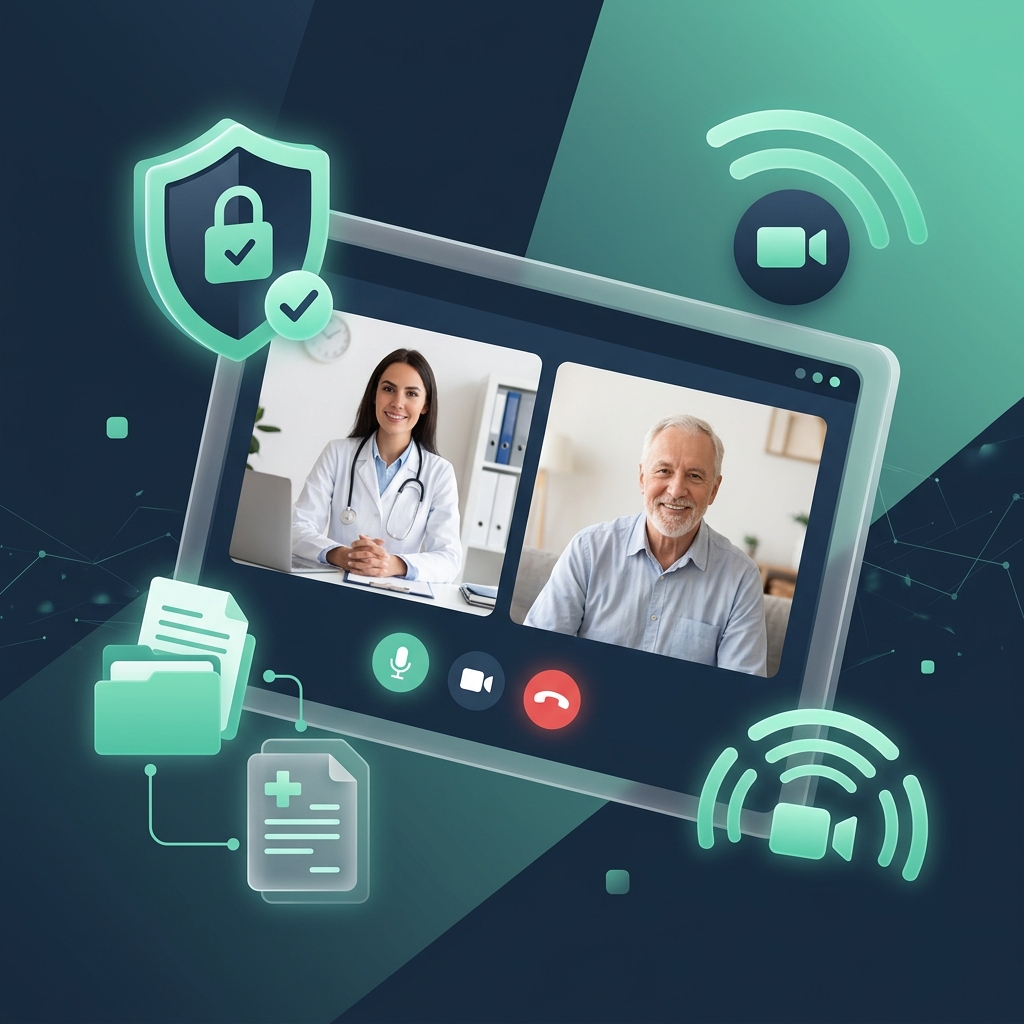
Needed a HIPAA-compliant telehealth platform and EHR integration from scratch. 6-month launch deadline. ForNex developed a custom patient portal, video consultation module, and FHIR R4 integration with Athenahealth - deployed on AWS HIPAA architecture.

Apollo 360 Health

02
Case Study 03

Oasis Notes

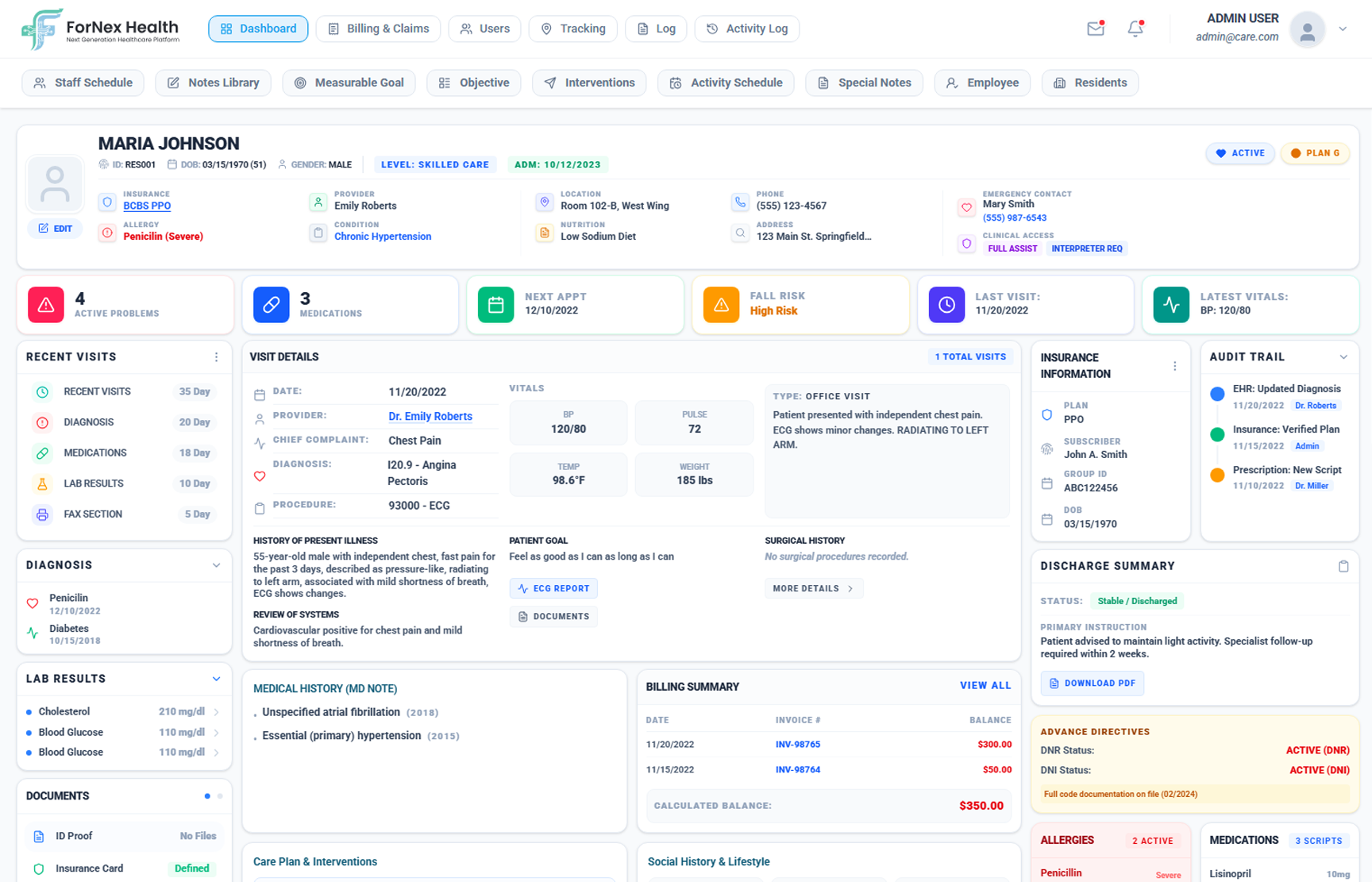
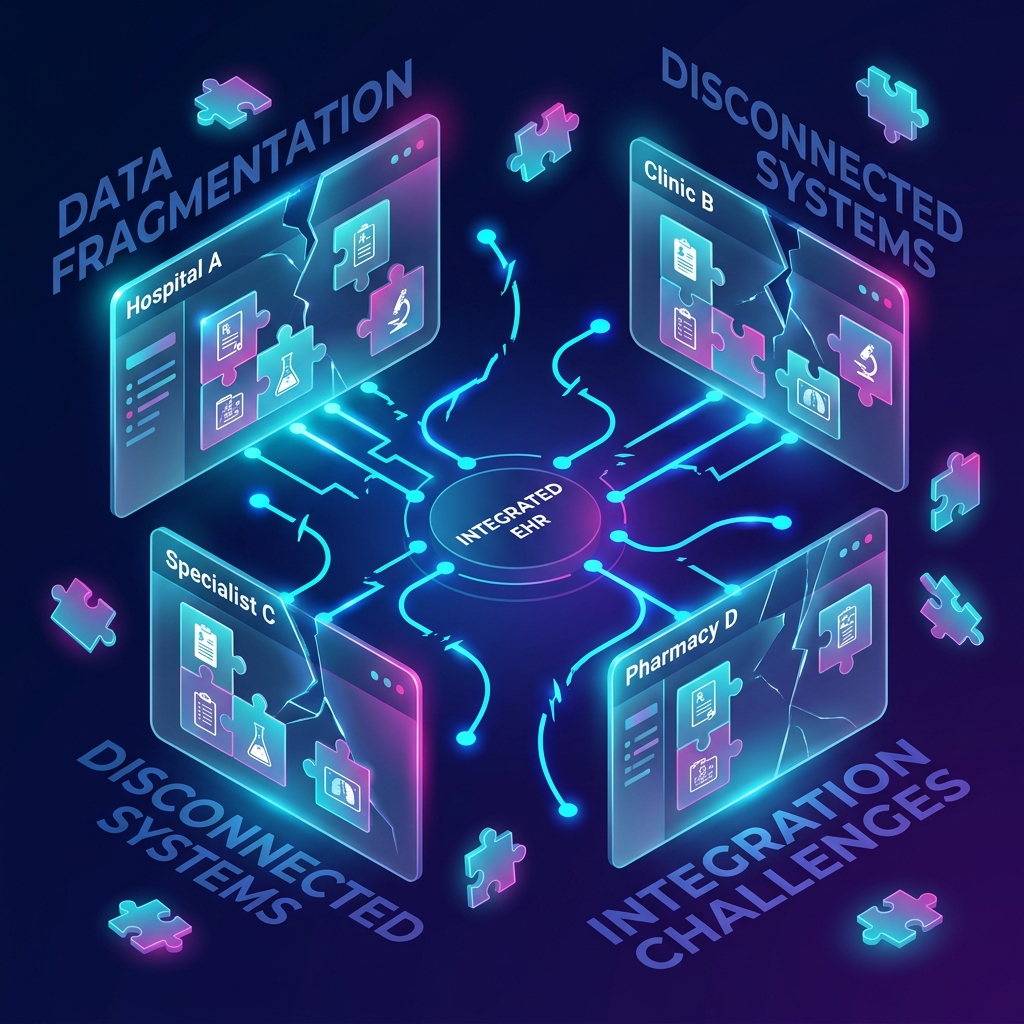
Providers struggled with fragmented documentation and inefficient workflows while accessing patient records across multiple system screens. ForNex Health optimized workflows and unified patient records, enabling faster access to history, labs, diagnoses, and medications.

Oasis Notes

03
Case Study 04

Super School Org

Super School Org needed an engaging, mobile-first solution to help parents stay connected to their child's educational journey in real time. We developed a seamless mobile app that allows parents to track progress, receive updates, communicate with teachers, and access resources from anywhere, anytime.

Super School Org

04
Case Study 05

MRI Safe Programming & Scheduling

A specialized healthcare solution designed to ensure safe MRI procedures for patients with pacemakers. The system enables clinicians to program devices into MRI-safe modes, verify compatibility, and manage pre-MRI workflows with structured scheduling and safety checks.

MRI Safe Programming & Scheduling

05
Healthcare System We Work With

Integrate with the Systems You Already Use

ForNex Health connects natively with the industry's leading EHR and practice management platforms - no rip-and-replace required.

FHIR R4 APIs
HL7 v2 & v3
SMART on FHIR
CDA / C-CDA
REST APIs
Webhooks
/images/epic.png

Industry standard for large health systems

/images/pcca.png

Simple, cloud-based EHR for small practices

/images/e-clinic.png

Widely used by independent practices

/images/nextgen.png

Designed for multi-specialty practices

/images/oracle.png

Enterprise EHR for modern healthcare organizations

/images/cerner.png

Trusted EHR for hospitals and health networks

/images/athenahealth.png

Cloud-based EHR for ambulatory care

/images/kareo.png

Built for small to mid-size practices

Global Network

Trusted by Leading Healthcare Organizations Across the Globe

insta_brans
mri
oasis
super-school
carevation
apollo
cardiac
insta_brans
mri
oasis
super-school
carevation
apollo
cardiac
Our Mission

Built to Make Healthcare Technology Work For Everyone Who Depends On It

Our Vision

A World Where No Patient Waits Longer Because of a Software Problem

Compliance & Security Certifications

Built for Healthcare Security & Compliance

HIPAA Certified

HIPAA Certified

Health Insurance Portability & Accountability Act

SOC 2 Type II

SOC 2 Type II

Independently audited system & organization controls

PHI Secure

PHI Secure

Protected health information handled per federal standards
AWS HIPAA Architecture

AWS HIPAA Architecture

Hosted on Amazon HIPAA-eligible cloud infrastructure

Google Health

Google Health

Google Cloud HIPAA-eligible services where applicable

FDA Guidelines

FDA Guidelines

Applicable medical device software compliance

Compliance & Security Certifications

Built for Healthcare Security & Compliance

/images/hl7-2.png
/images/hl7-3.png
/images/smart.png
Core Expertise

Services

We provide multiple services from digital production to technology services. Based on understanding your business goals.

01

Healthcare Software Development

02

EHR & EMR Integration Solutions

03

Website & Mobile Apps Development

04

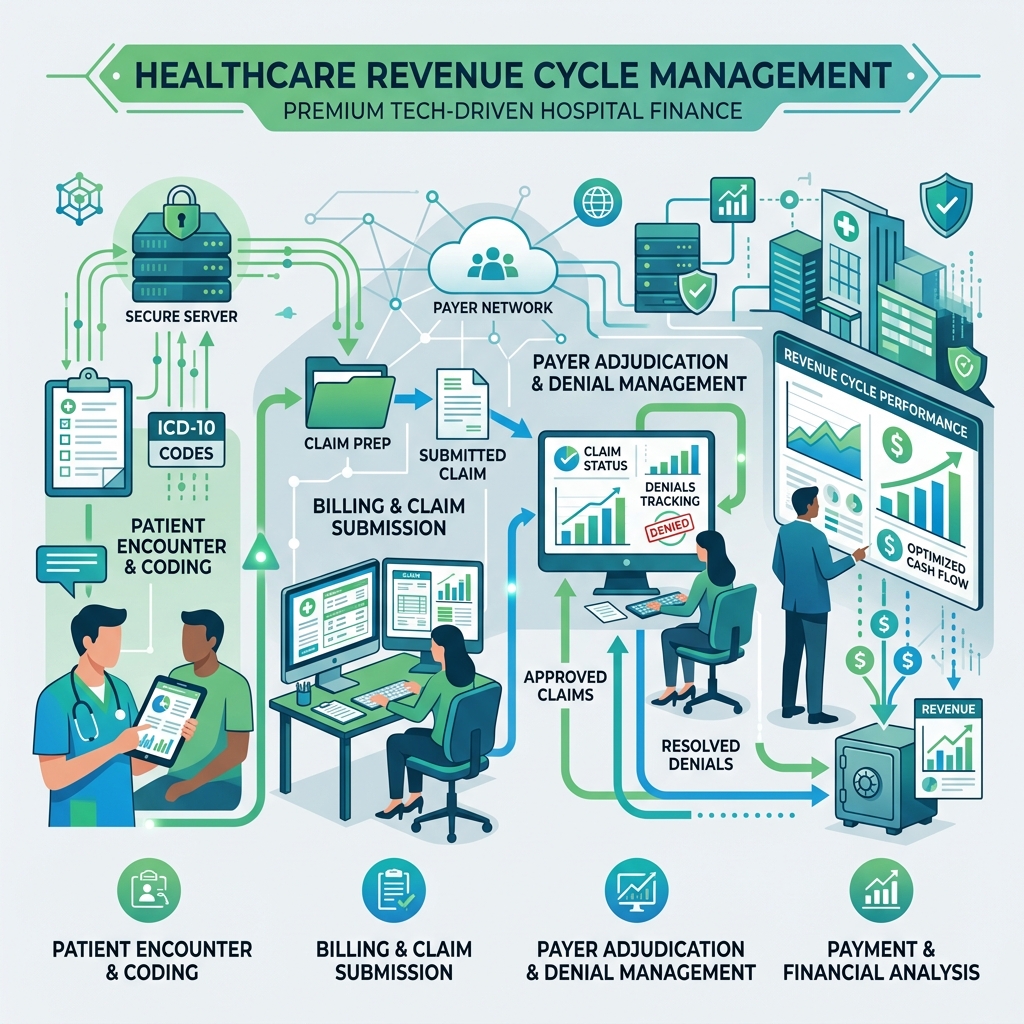
Medical Billing & Revenue Cycle Management

05

Healthcare Digital Marketing Services

Service 01

Healthcare Software Development

Custom healthcare software solutions designed to streamline clinical workflows and improve patient care.

Custom healthcare platforms

Built using FHIR R4 & HL7 standards

Product Showcase

See Our Healthcare Software Platform EHR, Billing & Beyond

No vague promises. See the actual dashboards and tools our healthcare clients use every day.
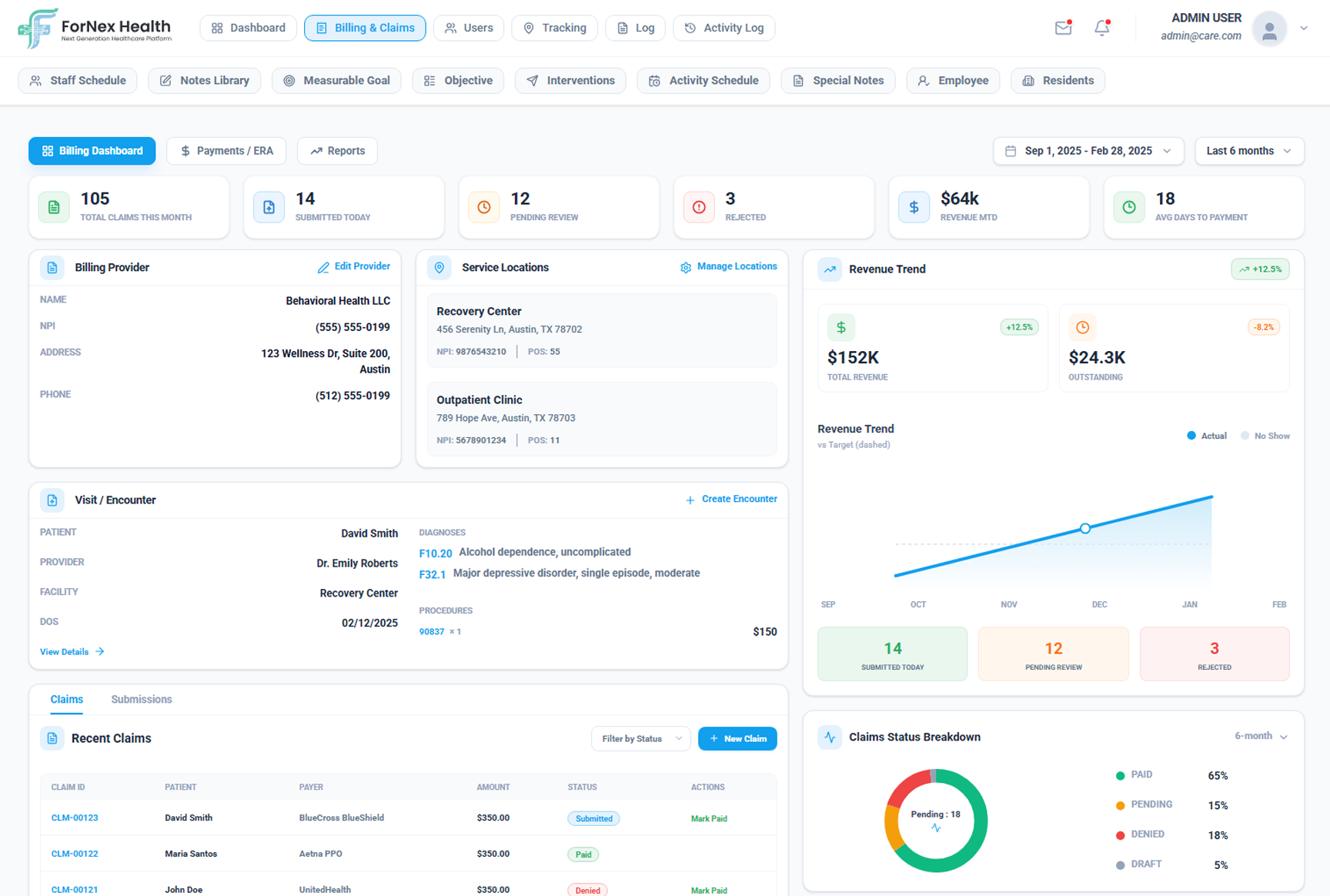
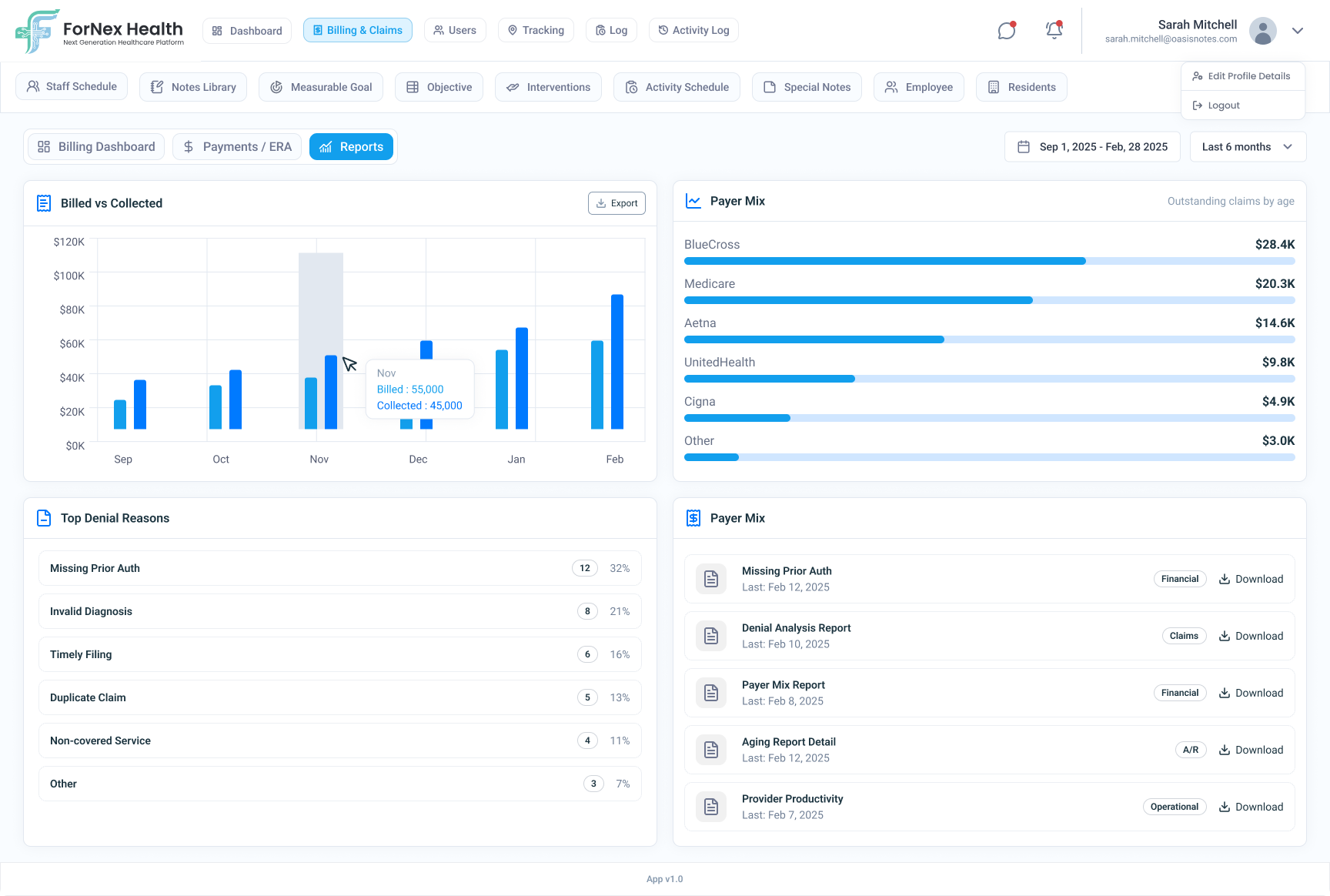
Medical Billing Dashboard

Medical Billing Dashboard

Optimize your revenue cycle with our advanced billing platform. Track claims, manage denials, and accelerate payments with real-time analytics and automated workflows.

  • HIPAA Compliant & Secure
  • Real-time Data Sync
  • Scalable Cloud Architecture
Specialty-Specific Solutions

Billing & Software Built for Your Specialty

Medical billing codes, compliance rules, and EHR workflows vary dramatically by specialty. We've built expertise across 12+ medical fields to ensure your practice runs with precision.

Physical Therapy

Physical Therapy

Rehab
Cardiology

Cardiology

Heart Care
Orthopedics

Orthopedics

Bone & Joint
Pediatrics

Pediatrics

Child Care
Dentistry

Dentistry

Oral Surgery
Physical Therapy

Physical Therapy

Rehab
Cardiology

Cardiology

Heart Care
Orthopedics

Orthopedics

Bone & Joint
Pediatrics

Pediatrics

Child Care
Dentistry

Dentistry

Oral Surgery
Radiology

Radiology

Imaging
Dermatology

Dermatology

Skin Care
Oncology

Oncology

Cancer Care
Psychiatry

Psychiatry

Mental Health
Urgent Care

Urgent Care

Emergency Medicine
Radiology

Radiology

Imaging
Dermatology

Dermatology

Skin Care
Oncology

Oncology

Cancer Care
Psychiatry

Psychiatry

Mental Health
Urgent Care

Urgent Care

Emergency Medicine

Trusted by Healthcare Leaders Across the Industry

From private practices to enterprise health systems - here's what our clients say after going live.

"The ForNex Health team delivered a secure and scalable platform that perfectly fits our educational workflows. Their attention to compliance and system integration made the entire process smooth and successful."

Teena Ceballos

Teena Ceballos

Founder, SuperSchool.org

Clear The Confusion

Frequently Asked Questions

ForNex Health works with a wide range of healthcare organizations including hospitals, private clinics, telehealth providers, healthcare startups, medical billing companies, digital health platforms, and healthcare SaaS providers - delivering HIPAA-compliant technology solutions tailored to each organization's specific workflows and compliance requirements.

The cost depends on the complexity of the solution, number of integrations required, and compliance depth. A focused healthcare MVP typically starts around $40,000–$80,000. Enterprise EHR platforms, full RCM systems, or multi-integration telehealth platforms range significantly higher depending on scope. We provide a detailed cost breakdown after our discovery session - so you have full transparency before committing to anything.

Absolutely. We work extensively with healthcare startups - helping them design, build, and launch HIPAA-compliant MVP platforms in 3–4 months. Our team supports everything from product architecture and UI/UX design to EHR integrations, PHI-secure cloud infrastructure, and investor-ready technical documentation.

Yes. We sign Business Associate Agreements with all our healthcare clients before any PHI-related work begins. This ensures full HIPAA compliance and clearly defines both parties' responsibilities for handling protected health information - a non-negotiable requirement for any serious healthcare software engagement.

We support all major healthcare interoperability standards including FHIR R4, HL7 v2/v3, and SMART on FHIR. These standards allow healthcare systems to exchange patient data securely and seamlessly across platforms - including Epic, Cerner, Athenahealth, eClinicalWorks, and other leading EHR systems.

ForNex Health focuses exclusively on healthcare technology. Our team has deep expertise in EHR integrations, HIPAA compliance engineering, AI healthcare solutions, and interoperability standards - built over 10+ years working only in healthcare. This allows us to deliver scalable, compliant digital health platforms significantly faster and more reliably than general software development companies.

Our stack includes React, Angular, Vue.js, Node.js, Python, and .NET on the frontend and backend. We build on AWS HIPAA-eligible cloud infrastructure and Google Cloud Healthcare API, with full support for FHIR R4, HL7, and SMART on FHIR interoperability standards. For AI solutions we use TensorFlow, PyTorch, OpenAI APIs, and NLP pipelines.

Yes. We help healthcare organizations modernize outdated systems by migrating to secure HIPAA-compliant cloud environments, rebuilding integrations to FHIR R4 standards, enhancing security architecture, and adding AI and automation layers - without disrupting your current clinical operations during the transition.

A focused healthcare MVP typically takes 3–4 months from kickoff to launch. A full custom EHR system, enterprise billing platform, or multi-integration telehealth product takes 6–12 months depending on integrations and compliance requirements. We provide a phased timeline breakdown after discovery so you have complete visibility from day one.


Still have questions?

Can't find the answer you're looking for? Let's talk directly.

Our Blogs

Insight & Resources from Our Healthcare Experts

What Most Hospitals Get Wrong When Deploying AI Agents in Revenue Cycle

What Most Hospitals Get Wrong When Deploying AI Agents in Revenue Cycle

U.S. healthcare organizations lose over $262 billion annually due to revenue cycle inefficiencies. What gets cited less often is why AI deployments meant to fix this keep failing in practice.

Remote Patient Monitoring in 2026: How to Build a Program That Actually Reduces Readmissions

Remote Patient Monitoring in 2026: How to Build a Program That Actually Reduces Readmissions

The readmission numbers for remote patient monitoring programs look remarkable on paper. Here is how to build a program that actually delivers on the readmission reduction promise.

The 2026 Executive Guide: What Is an EHR System, Why Implementations Fail and How to Optimize

The 2026 Executive Guide: What Is an EHR System, Why Implementations Fail and How to Optimize

Healthcare technology is at a really important turning point. With hospital procedures getting more complicated and more rules, hospital managers and IT bosses are asking how to stop costly new software systems from collapsing.

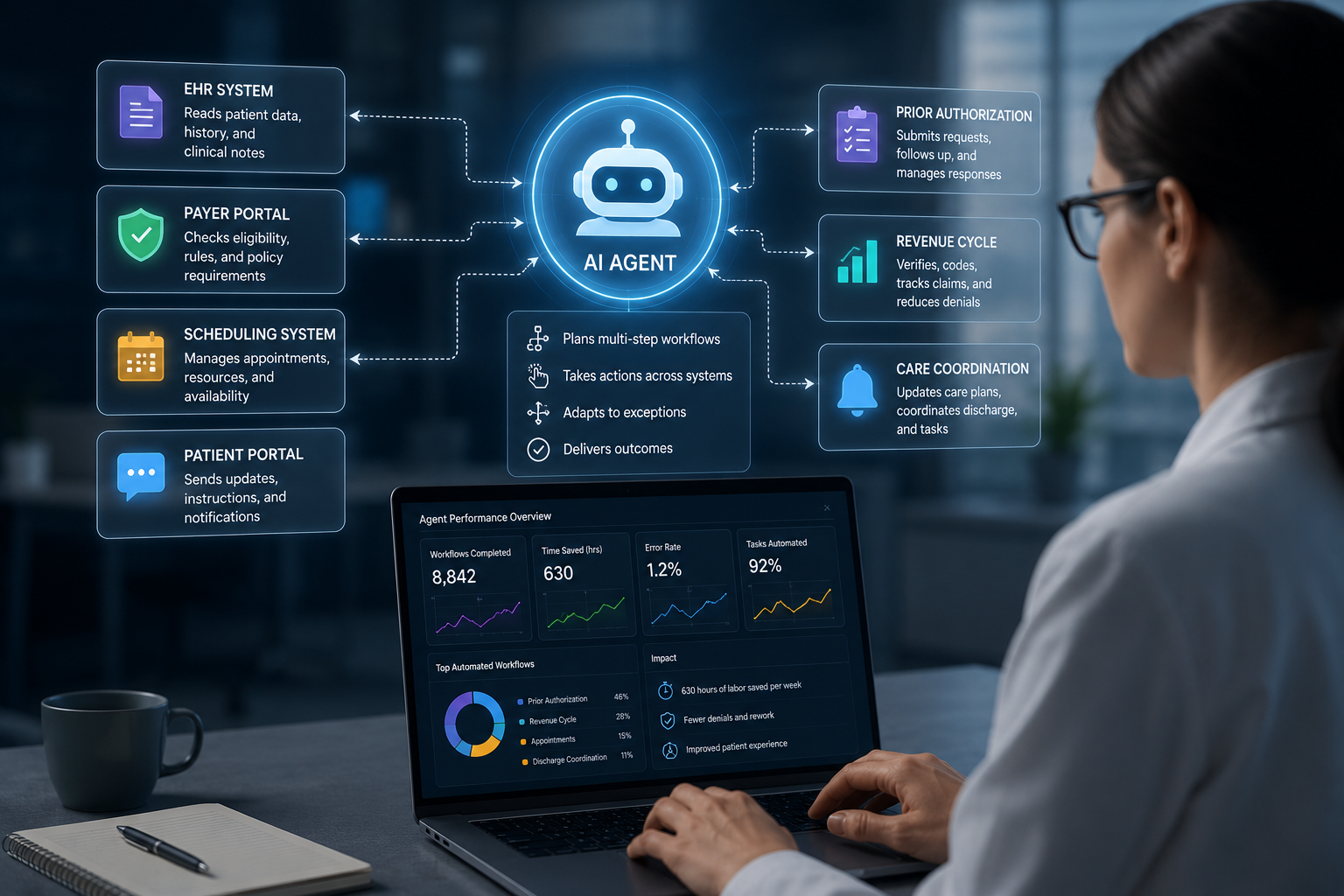
Agentic AI in Healthcare: What Hospital CTOs Need to Know

Agentic AI in Healthcare: What Hospital CTOs Need to Know

43% of health systems are already piloting agentic AI, but only 3% have deployed it. Discover the three hard questions CTOs must answer before starting their first pilot.

Why Healthcare Software Fails in the First 90 Days

Why Healthcare Software Fails in the First 90 Days

The first 90 days of a new healthcare software rollout are where everything either clicks or collapses. Excitement gives way to staff frustration. Adoption flatlines.

The FHIR Prior Auth Deadline Is January 2027. Is Your Hospital Ready?

The FHIR Prior Auth Deadline Is January 2027. Is Your Hospital Ready?

Eight months. That is how long hospitals have before the CMS-0057-F API compliance deadline hits on January 1, 2027.

Ambient AI Scribes Are Everywhere. Here's How to Actually Choose One

Ambient AI Scribes Are Everywhere. Here's How to Actually Choose One

Every major health system has an ambient AI scribe vendor in their inbox right now. The market has exploded, but choosing wrong means support nightmares and quiet abandonment. Here is how to actually evaluate them.

What Most Hospitals Get Wrong When Deploying AI Agents in Revenue Cycle

What Most Hospitals Get Wrong When Deploying AI Agents in Revenue Cycle

U.S. healthcare organizations lose over $262 billion annually due to revenue cycle inefficiencies. What gets cited less often is why AI deployments meant to fix this keep failing in practice.

Remote Patient Monitoring in 2026: How to Build a Program That Actually Reduces Readmissions

Remote Patient Monitoring in 2026: How to Build a Program That Actually Reduces Readmissions

The readmission numbers for remote patient monitoring programs look remarkable on paper. Here is how to build a program that actually delivers on the readmission reduction promise.

The 2026 Executive Guide: What Is an EHR System, Why Implementations Fail and How to Optimize

The 2026 Executive Guide: What Is an EHR System, Why Implementations Fail and How to Optimize

Healthcare technology is at a really important turning point. With hospital procedures getting more complicated and more rules, hospital managers and IT bosses are asking how to stop costly new software systems from collapsing.
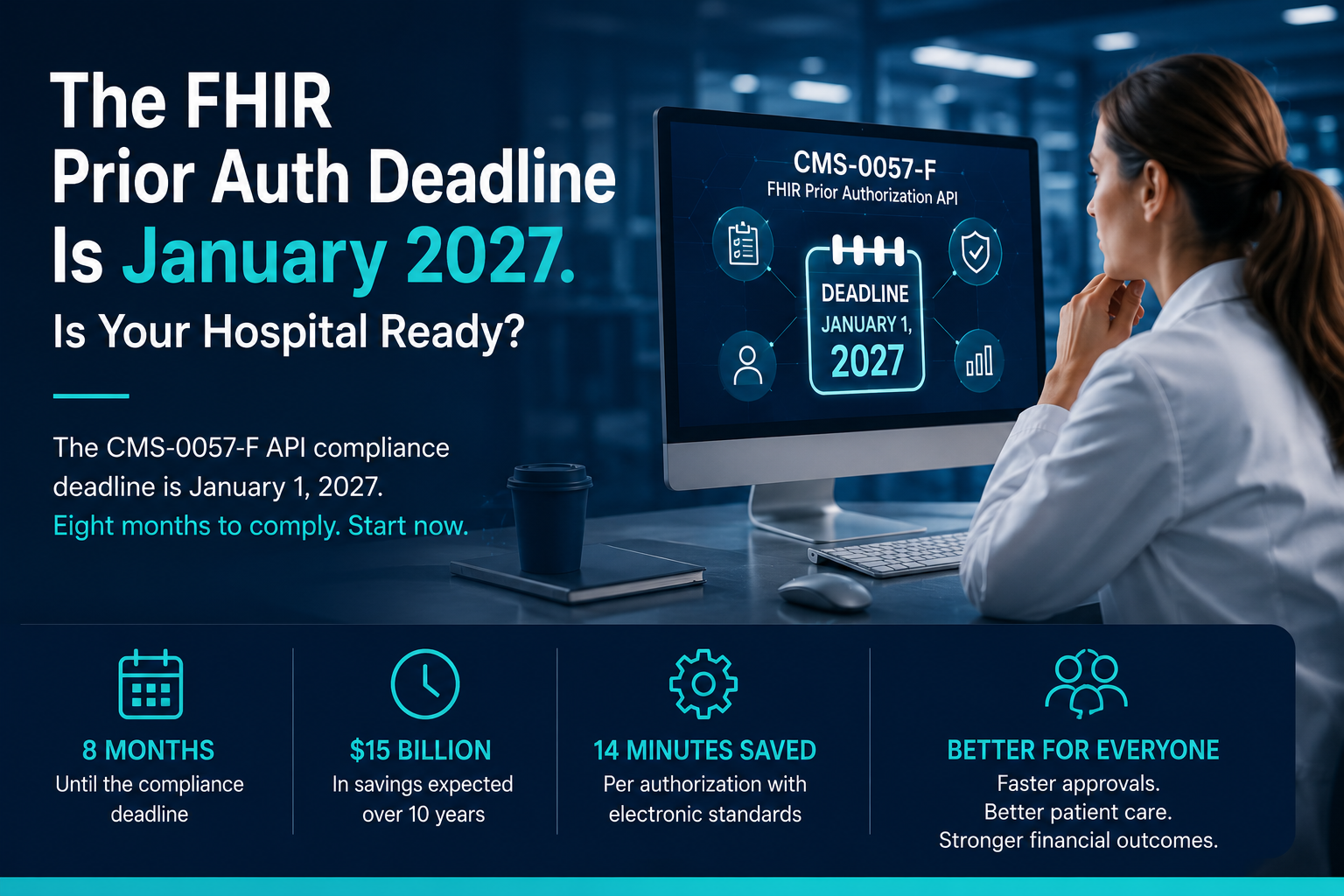
Agentic AI in Healthcare: What Hospital CTOs Need to Know

Agentic AI in Healthcare: What Hospital CTOs Need to Know

43% of health systems are already piloting agentic AI, but only 3% have deployed it. Discover the three hard questions CTOs must answer before starting their first pilot.

Why Healthcare Software Fails in the First 90 Days

Why Healthcare Software Fails in the First 90 Days

The first 90 days of a new healthcare software rollout are where everything either clicks or collapses. Excitement gives way to staff frustration. Adoption flatlines.

The FHIR Prior Auth Deadline Is January 2027. Is Your Hospital Ready?

The FHIR Prior Auth Deadline Is January 2027. Is Your Hospital Ready?

Eight months. That is how long hospitals have before the CMS-0057-F API compliance deadline hits on January 1, 2027.

Ambient AI Scribes Are Everywhere. Here's How to Actually Choose One

Ambient AI Scribes Are Everywhere. Here's How to Actually Choose One

Every major health system has an ambient AI scribe vendor in their inbox right now. The market has exploded, but choosing wrong means support nightmares and quiet abandonment. Here is how to actually evaluate them.

What Most Hospitals Get Wrong When Deploying AI Agents in Revenue Cycle

What Most Hospitals Get Wrong When Deploying AI Agents in Revenue Cycle

U.S. healthcare organizations lose over $262 billion annually due to revenue cycle inefficiencies. What gets cited less often is why AI deployments meant to fix this keep failing in practice.

Remote Patient Monitoring in 2026: How to Build a Program That Actually Reduces Readmissions

Remote Patient Monitoring in 2026: How to Build a Program That Actually Reduces Readmissions

The readmission numbers for remote patient monitoring programs look remarkable on paper. Here is how to build a program that actually delivers on the readmission reduction promise.

The 2026 Executive Guide: What Is an EHR System, Why Implementations Fail and How to Optimize

The 2026 Executive Guide: What Is an EHR System, Why Implementations Fail and How to Optimize

Healthcare technology is at a really important turning point. With hospital procedures getting more complicated and more rules, hospital managers and IT bosses are asking how to stop costly new software systems from collapsing.
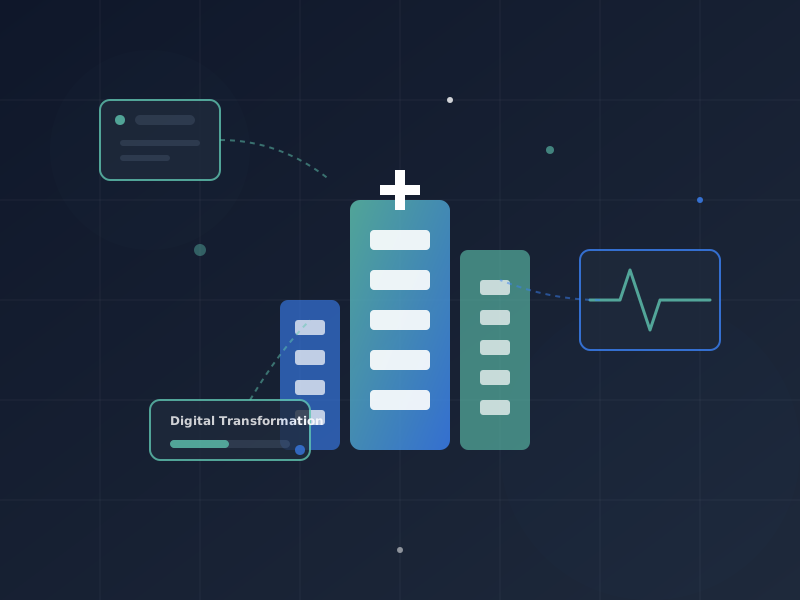
Agentic AI in Healthcare: What Hospital CTOs Need to Know

Agentic AI in Healthcare: What Hospital CTOs Need to Know

43% of health systems are already piloting agentic AI, but only 3% have deployed it. Discover the three hard questions CTOs must answer before starting their first pilot.

Why Healthcare Software Fails in the First 90 Days

Why Healthcare Software Fails in the First 90 Days

The first 90 days of a new healthcare software rollout are where everything either clicks or collapses. Excitement gives way to staff frustration. Adoption flatlines.

The FHIR Prior Auth Deadline Is January 2027. Is Your Hospital Ready?

The FHIR Prior Auth Deadline Is January 2027. Is Your Hospital Ready?

Eight months. That is how long hospitals have before the CMS-0057-F API compliance deadline hits on January 1, 2027.

Ambient AI Scribes Are Everywhere. Here's How to Actually Choose One

Ambient AI Scribes Are Everywhere. Here's How to Actually Choose One

Every major health system has an ambient AI scribe vendor in their inbox right now. The market has exploded, but choosing wrong means support nightmares and quiet abandonment. Here is how to actually evaluate them.