MRI Logic needed more than a developer - it needed a clinical technology team that understood the life-critical stakes of cardiac device safety. ForNex Health designed and delivered the full product, from discovery to app store, in 2025.

A specialized healthcare solution designed to ensure safe MRI procedures for patients with pacemakers.
Client
MRI Safe Mode · mrisafemode.com
Founder
Martin Kloosterman, MD - Cardiac Electrophysiologist
Industry
Cardiac Imaging & Electrophysiology
Project Type
Clinical Mobile Application (iOS & Android)
Stage
Phase 1 & 2 Delivered · Phase 3 In Progress
Geography
United States (National)
Business Model
Premium
Platforms
React Native · .NET · MS SQL Server · Groq AI
Dr. Martin Kloosterman is a specialist in cardiac electrophysiology with deep clinical expertise in cardiac implantable electronic devices (CIEDs) - pacemakers, ICDs, loop recorders, and leadless devices. Over his career, he personally witnessed the coordination failures that occur when a CIED patient is scheduled for an MRI without device compatibility having been verified in advance.
To solve this at the coordination level, Dr. Kloosterman built Smart-Praxis - a multi-role healthcare SaaS platform at mrisafemode.com - now serving 243 registered users across hospitals, MRI centers, device manufacturers, and clinical experts. The platform digitizes the full MRI Konditionierung (MK) workflow: pre-scan device programming, multi-party coordination, and post-scan reprogramming.
SaaS platform for MRI workflow management
Used across hospitals, MRI centers, and experts
But one critical gap remained. While Smart-Praxis handled institutional coordination, clinicians at the bedside still had no fast, reliable tool to answer the foundational question before scheduling began: Is this specific cardiac device system actually MRI-conditional? That gap became MRI Logic.

Cardiac Electrophysiology Expert
CIEDs, pacemakers, ICDs, and leadless devices
"The manual process for checking MRI conditionality was slow, fragmented, and completely dependent on the individual clinician's knowledge. I needed a tool that gave any clinician the right answer in seconds - regardless of their familiarity with specific device models."
Founder, MRI Safe Mode
Flip through our story to see how we transformed a bold vision into an industry-shifting reality through relentless innovation.

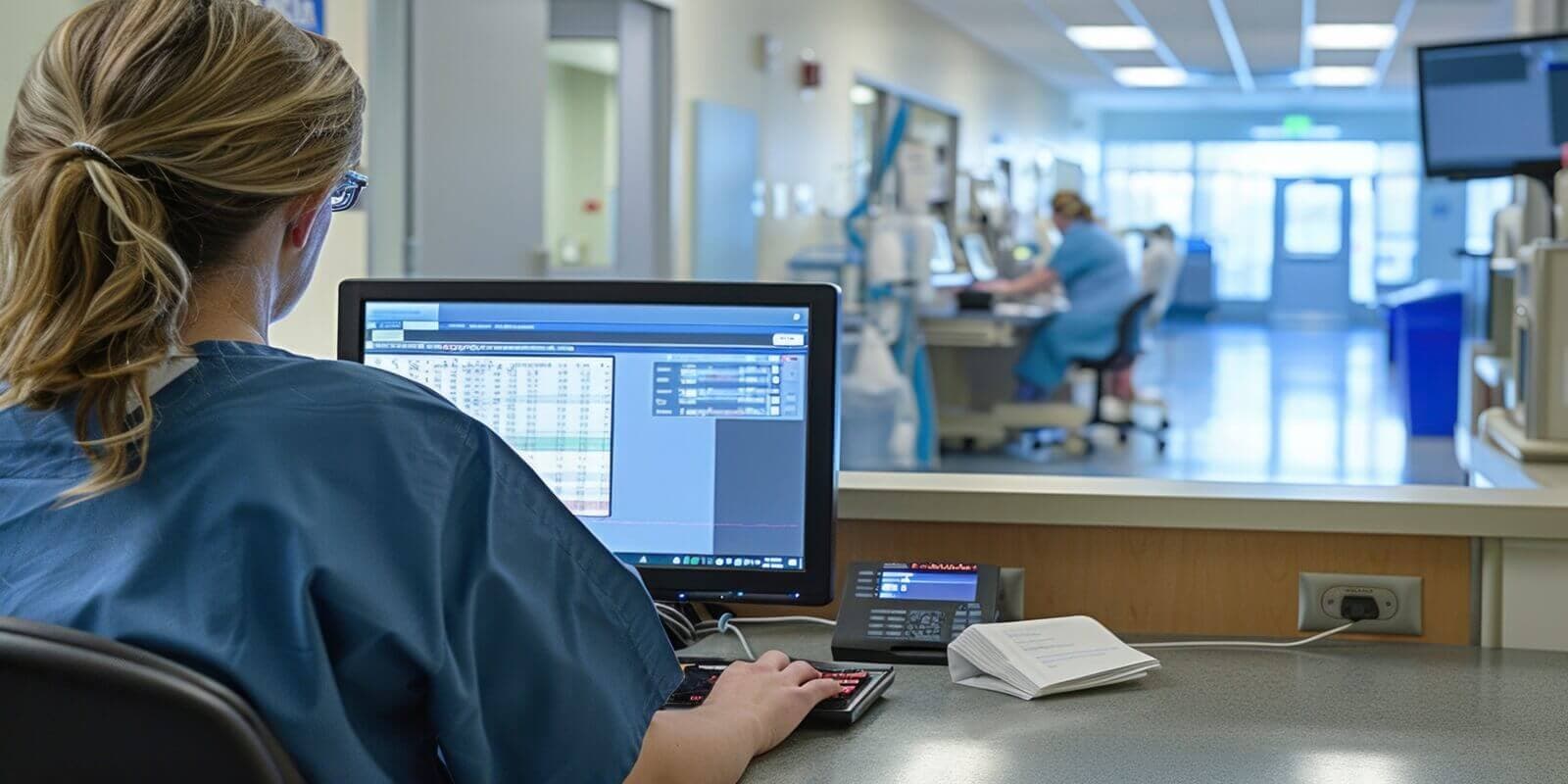
Outdated manuals clinicians relied on to check device compatibility.

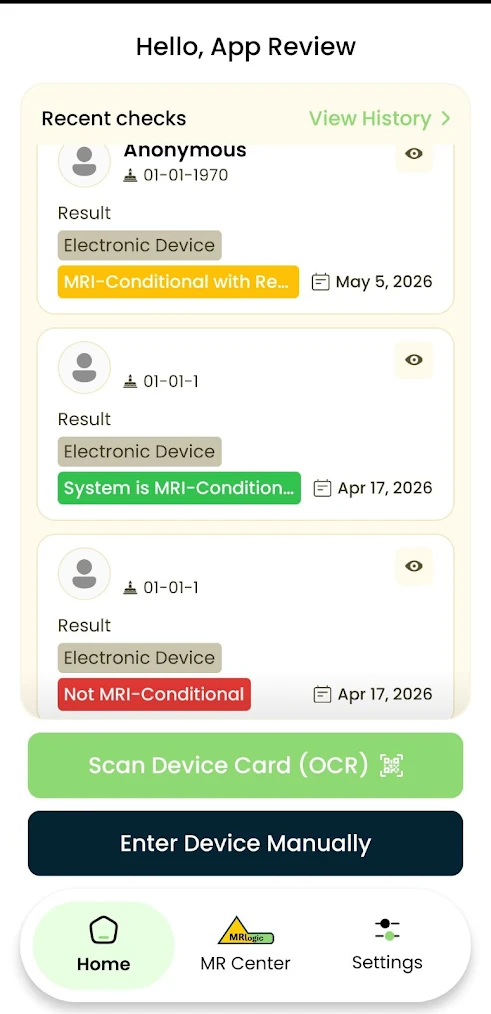
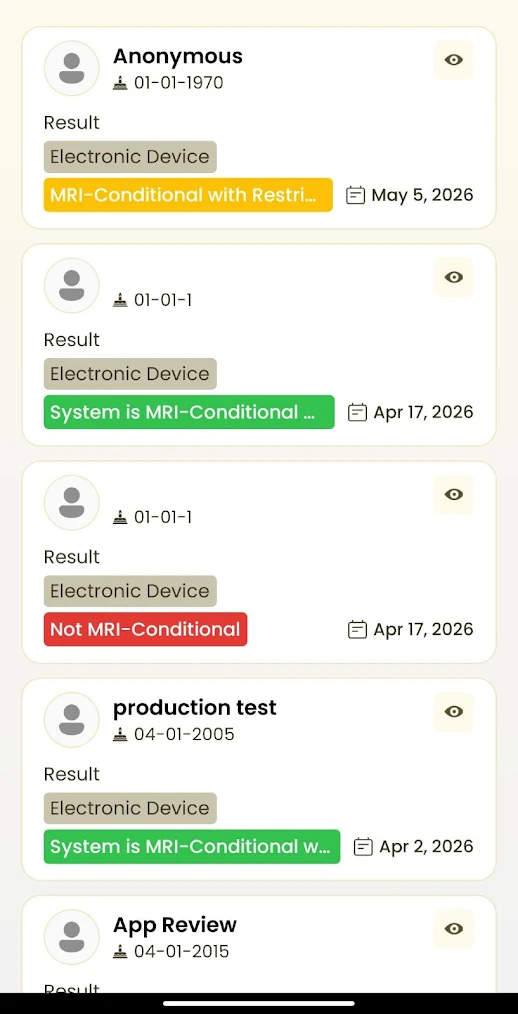
Recent checks with color-coded results visible the moment you open the app.

Slow, undocumented calls to manufacturer representatives unavailable after hours.

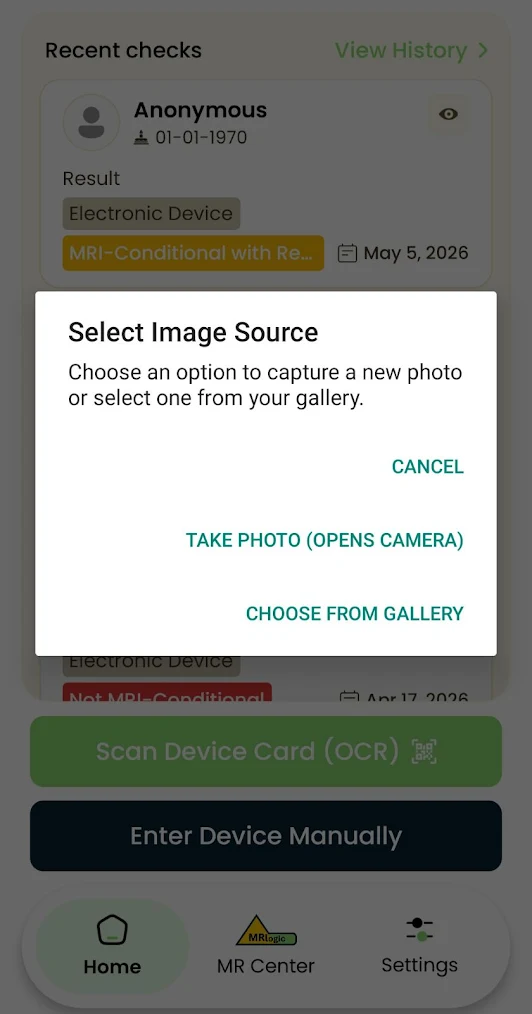
Take a photo or choose from gallery = device details extracted automatically in seconds.

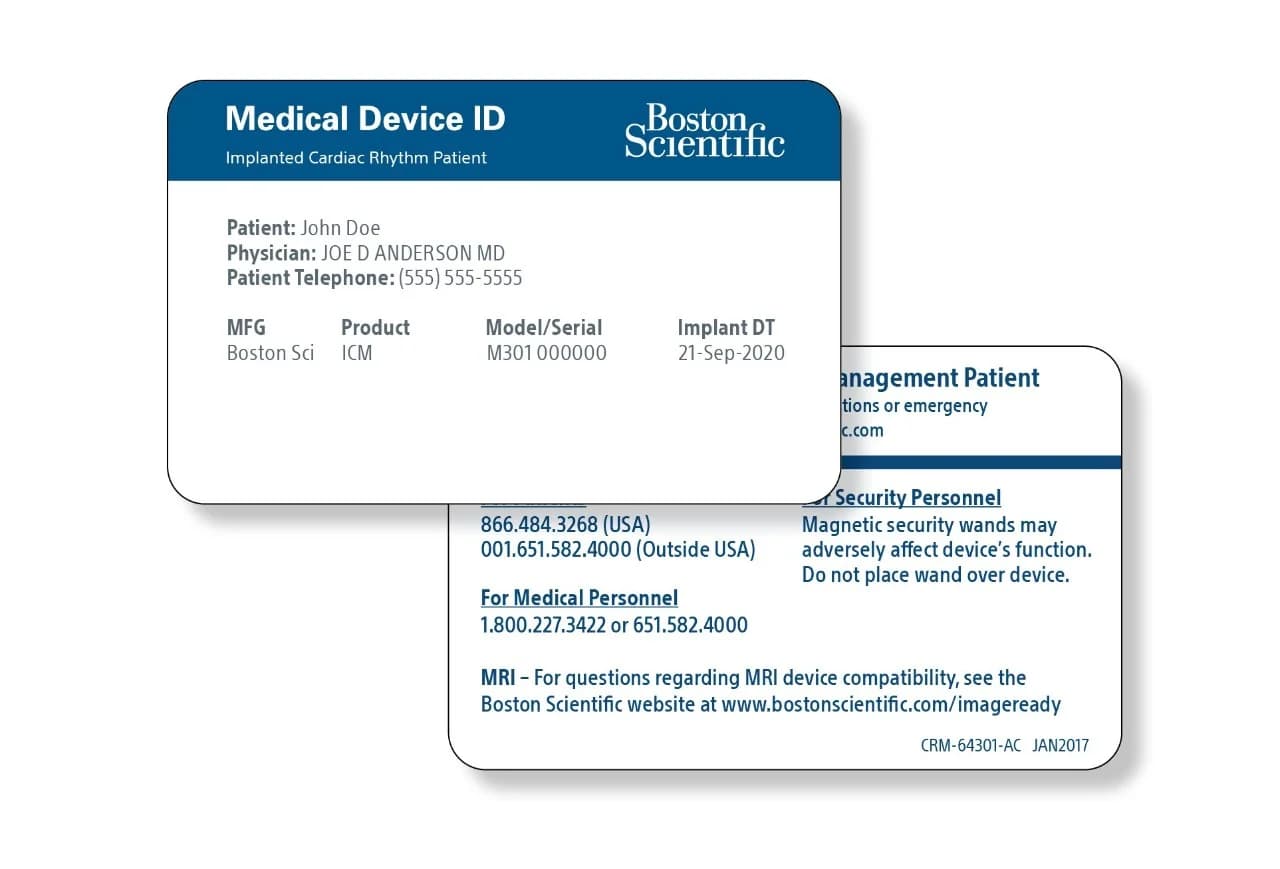
Reading the patient's wallet card then searching four manufacturer websites one by one.

Select device type, enter model number, add patient name and date of birth = clean, fast, and error-proof.

Reading the patient's wallet card then searching four manufacturer websites one by one.

Green, Yellow, Orange or Red = every result is clear, dated, and saved to history automatically.

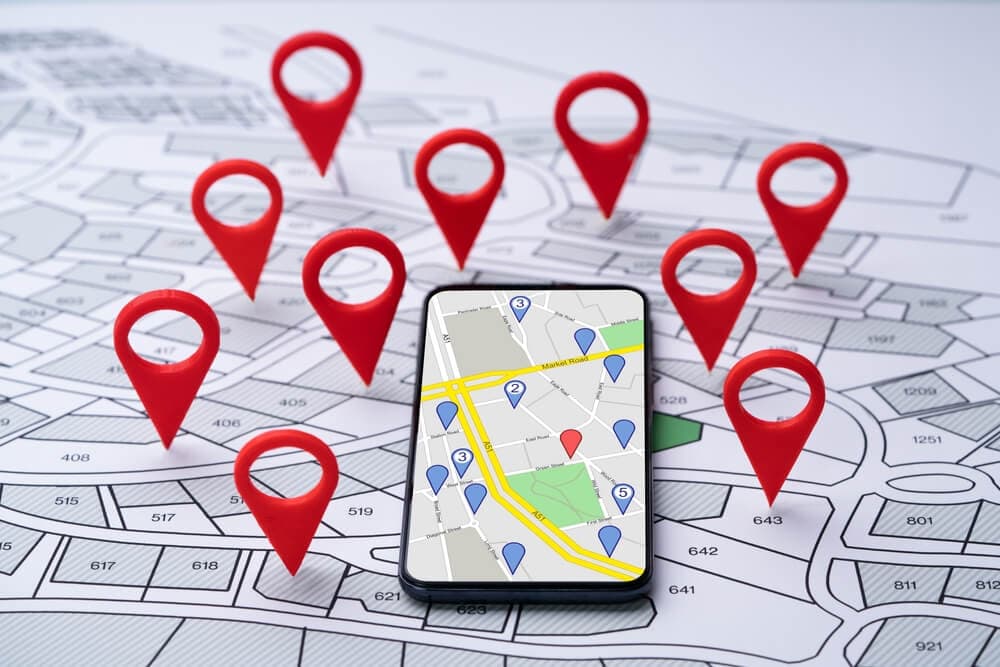
Patients often struggled to find MRI centers for CIED scans, making the process slow and stressful.

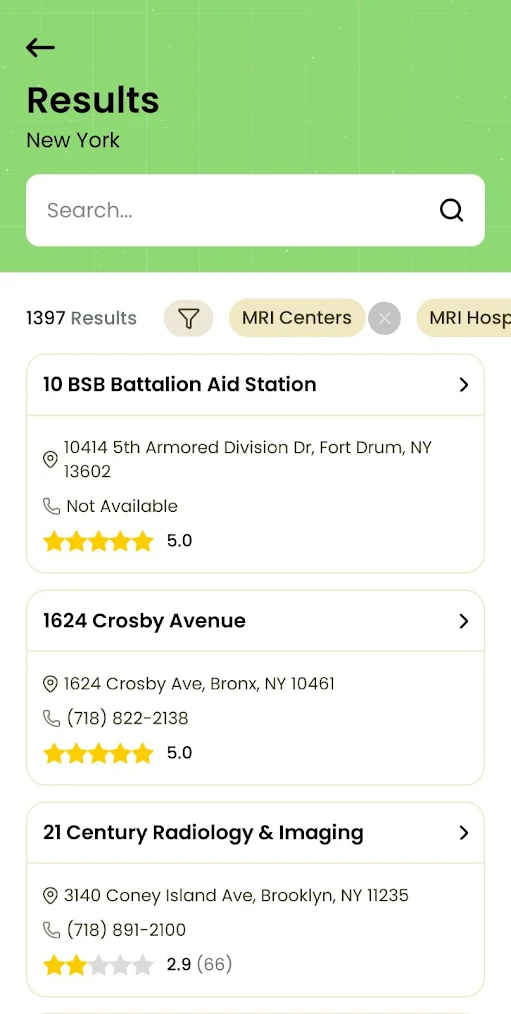
Search and filter MRI centers & hospitals across the US with address, phone, & ratings in one place.
What clinicians were actually using before MRI Logic:
Last-minute scan cancellations after patient prep - wasted clinical time every single day
Incomplete audit trails - no formal documentation of compatibility decisions
Knowledge-dependent accuracy - no standardized logic across different clinicians
Cross-manufacturer combinations handled inconsistently with no defined protocol
Delayed diagnosis for patients genuinely needing MRI imaging
Before MRI Logic, there was no single tool to verify cardiac device MRI compatibility at the point of care. The consequences were not minor inconveniences they were clinical risks and significant operational waste happening daily across every MRI center in the country.
Four separate portals, different formats, no cross-reference capability
Manual website lookups across four manufacturer portals. 20-45 minutes per patient. No structured documentation. Scans cancelled after patient prep. Accuracy entirely dependent on individual knowledge. Cross-manufacturer cases handled with no defined process.
Single OCR scan or manual entry in the app. Color-coded result in under 10 seconds. Instant PDF report generated automatically. Compatibility confirmed before scheduling begins. Standardized logic ensures consistent decisions regardless of who performs the check.
Three clinical realities converged to make MRI Logic both urgent and necessary:
MRI centers routinely discovered too late that a patient's cardiac device was not MRI-conditional - after the patient had already been scheduled, prepped, and brought to the suite. A 10-second check before scheduling would prevent hours of wasted clinical time and unnecessary patient distress.
Staff relied on manual checks across four separate manufacturer portals - each with different formats and update cadences. Accuracy depended entirely on individual knowledge, not a standardized system. For a life-critical clinical decision, that was not acceptable.
The Smart-Praxis web platform could coordinate the MRI workflow between institutions - but it couldn't answer the pre-scheduling compatibility question that triggered the whole process. MRI Logic was designed as the mobile front door: the instant check that feeds into the broader Smart-Praxis ecosystem.
Get accurate color coded MRI safety results in under 10 seconds from any device
Remove human error by combining all manufacturer rules into one logic system
Scan device cards to auto fill data and avoid manual input errors
Create structured reports for every check that can be shared and stored easily
Built to expand into advanced features without rebuilding the core system
Get accurate color coded MRI safety results in under 10 seconds from any device
Remove human error by combining all manufacturer rules into one logic system
Scan device cards to auto fill data and avoid manual input errors
Create structured reports for every check that can be shared and stored easily
Built to expand into advanced features without rebuilding the core system
ForNex Health designed and developed MRI Logic end-to-end 10 fully functional modules across iOS and Android, built around a central conditionality rules engine. The four-color result system gives every clinician an unambiguous, actionable answer.
Full email-based login, signup, and forgot password flow
Guest Mode allows immediate use without account creation
OTP verification for secure account access
Critical for time-sensitive clinical environments where speed matters
Central hub with single-tap 'Start New Device Check' action
Designed for one-handed use with minimum taps to core functions
Recent scans list visible immediately on load
Quick access to history, manual entry, and OCR scanning
Camera opens with guided rectangular overlay for card alignment
Confirmation screen lets the clinician review and correct extracted data
Automatically extracts device name, model number, lead info, and manufacturer
Eliminates manual typing errors in high-pressure clinical settings
Manufacturer dropdown: Medtronic, Abbott, Boston Scientific, Biotronik
Dynamic lead count detection based on device type (1, 2, or 3 leads)
Autocomplete for device model names and numbers - blocks invalid entries
Fields turn green on valid match, red on unrecognized entry
Combined view of all entered device and MRI machine details before submitting
Prevents errors from reaching the conditionality logic engine
Full edit capability - nothing is locked until the clinician confirms
Clean, distraction-free layout built for clinical decision moments
Color-coded result: Green, Yellow, Orange, or Red - visible in one glance
Body region restrictions, exclusion zones, and manufacturer-specific warnings
Detailed analysis: SAR limits, B1+RMS values, field strength (1.5T / 3T)
'Read More' screen provides full technical breakdown for complex cases
Generates structured clinical report: patient details, device models, and result
Shareable via email or exportable directly into patient records
Includes restrictions, special notes, timestamp, and doctor/MRI center info
Built to satisfy clinical audit and formal documentation requirements
Searchable log of all previous MRI checks in one place
Filter by patient name or device model for fast retrieval
Detail view for each past check with stored result and PDF access
Supports ongoing case tracking across multiple patients
Search and filter all MRI centers and hospitals across the entire United States
List view and map view with center pins and distance markers
Website, map directions, and social media info for every listed center
GPS-based location detection or manual city / ZIP code entry
Full center profiles: address, machine type (1.5T / 3T), working hours
Future Phase 3: direct appointment booking and center contact / chat
About page, clinical disclaimer, and version information always accessible
Notification preferences, language options, and profile settings
Contact support built in for issue reporting and clinical queries
Guest / logged-in mode toggle - all preferences stored locally on device
Stakeholder interviews, market research, and persona development.
System design, tech stack, and API infrastructure planning.
Step 2System design, tech stack, and API infrastructure planning.
Wireframes, high-fidelity prototypes, and design systems.
Full-stack implementation and quality assurance cycles.
Step 4Full-stack implementation and quality assurance cycles.
Staged rollout and performance monitoring.
Data-driven improvements and scaling strategies.
Step 6Data-driven improvements and scaling strategies.
MRI Logic is designed for clinical professionals across the full cardiac imaging and referral workflow from the MRI center scheduling the scan to the device company technician programming the pacemaker.
MRI Center Staff & Radiographers
Cardiologists & EP Specialists
Device Company Technicians
Referring Physicians & Hospital Specialists
A stack selected for OCR accuracy, offline capability, structured data integrity, and logic engine performance the non-negotiables for clinical environments.
iOS App
React Native
Cross-platform consistency, shared codebase with Android, faster iteration cycles
Android App
React Native
Single codebase delivering consistent clinical UX across both platforms simultaneously
State Management
Redux-style architecture
Predictable state handling for multi-step device entry and conditionality logic flows
Backend API
.NET (ASP.NET)
Enterprise grade, type-safe backend with robust data validation for clinical logic
Database
MS SQL Server
Structured relational database ideal for complex device dataset queries and conditionality rule mapping
Server
Windows Server
Consistent with existing Smart-Praxis infrastructure; enterprise hosting reliability
AI Layer
Groq AI
High-speed AI inference; foundation for Phase 3 intelligent chatbot assistant
OCR Engine
Camera OCR Integration
Automated device card scanning - extracts model numbers and lead info without manual input
PDF Generator
Structured Report Engine
Clinical-grade PDF generation with patient data, device details, result, and timestamp
Medtronic
Pacemakers, ICDs, loop recorders, leadless devices
Encoded · Phase 1
Abbott / St. Jude
Pacemakers, ICDs, cardiac monitors
Encoded · Phase 1
Boston Scientific
Pacemakers, ICDs, CRT devices
Encoded · Phase 1
Biotronik
Pacemakers, ICDs, loop recorders
Encoded · Phase 1
Manual lookup across four separate manufacturer websites. 20-45 minutes per patient. Accuracy entirely dependent on the individual clinician's knowledge of specific device model generations and manufacturer update cycles.
OCR scan or manual entry in the app. Standardized logic engine delivers a color-coded result in under 10 seconds. Consistent, accurate, and independent of who is performing the check.
No structured documentation of the compatibility decision. Manual notes, if made at all. Audit trails incomplete. Patient records without any formal evidence of the check having been performed.
Every check generates a formal PDF report - patient details, device models, result, restrictions, and timestamp. Shareable in seconds. Added directly to the patient file with one tap.
Patients and referring clinicians searched Google, called hospital switchboards, or relied on word of mouth to find nearby MRI centers. No way to filter by machine type or verify center details quickly.
Full US MRI center database searchable directly in the app. Filter by location, machine type, and distance. Complete center profiles with directions, hours, website, and contact info - all in one place.
Incompatibility discovered after the patient was already scheduled, prepped, and in the MRI unit. Wasted clinical time, distressed patients, and disrupted scan schedules.
Compatibility checked before scheduling begins. Only MRI-conditional patients enter the queue. Scan cancellations due to device incompatibility are eliminated at the source.
MRI Logic is currently in active deployment with its initial clinical user base providing structured feedback. Qualitative outcomes from early use have validated the platform's design against the most critical pain points in cardiac MRI safety workflows.
Clinicians report feeling significantly more confident about MRI conditionality decisions - the guesswork has been removed entirely
MRI center staff describe the compatibility check as faster and more reliable than any manual method they had previously used
The OCR scanning feature is consistently rated the highest-value interaction - eliminating the most error-prone step in the workflow
Having a formal PDF report generated automatically is described as the single biggest improvement to the documentation process
The color-coded result system is immediately intuitive - no training required to interpret and act on the result with confidence
Fewer cancelled scans, faster patient throughput, and a standardized safety process that no longer depends on individual staff knowledge or availability
Faster access to MRI imaging they previously waited weeks for - simply because device compatibility could not be confirmed quickly enough
Reduced clinical waste, stronger audit trails, and a consistent safety protocol that scales across every unit, every clinician, and every shift
The most impactful clinical tools are built by people who have experienced the problem firsthand. If you have the clinical knowledge, ForNex provides the full technical execution - from architecture to app store - with a team that understands healthcare at a clinical level, not just a technical one.
MRI Logic's conditionality rules engine - encoding four manufacturers' datasets into a precise, clinically validated decision system - is exactly the kind of rule-based medical architecture ForNex specializes in. Clinical logic applications demand a fundamentally different level of accuracy than standard consumer apps.
MRI Logic was built in React Native for cross-platform mobile with a .NET + MS SQL Server backend on Windows Server - selected specifically for clinical-grade reliability, structured data integrity, and compatibility with existing healthcare IT environments.
We architected MRI Logic's database schema and API contracts to be category - agnostic from day one. Adding the MRI Centers module in Phase 2 required no rebuild. Phase 3's AI chatbot and booking system build on the same foundation - not alongside it.
MRI Logic uses Groq AI as its intelligence layer - and Phase 3 will introduce an AI chatbot assistant for clinical queries. ForNex Health integrates AI into medical workflows with accuracy as the non-negotiable constraint, not an afterthought.
From private practices to enterprise health systems - here's what our clients say after going live.