
Patient Portal Development: Why 60% of Patients Never Come Back After the First Login
Author
Fornex Health Team
Published
October 7, 2025
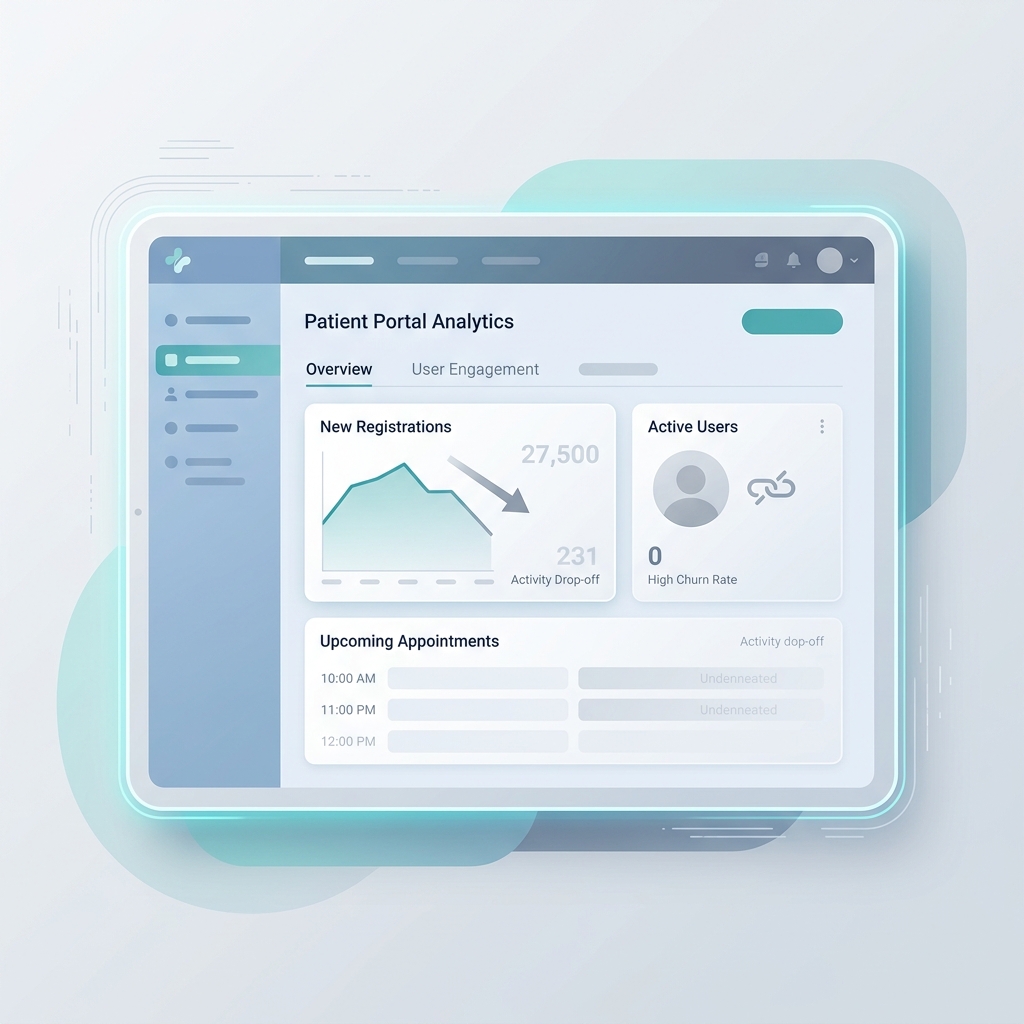
Nearly 90% of providers offer access to a patient portal. Less than one-third of patients have ever used theirs. Of those who enrolled, only 20% used it regularly.
This is not a patient problem. It is a product problem. Portals are being built for compliance checkboxes not for the people who are supposed to use them. The gap between portal deployment along with portal adoption is a design failure before it is anything else. Here is how to build one that patients actually return to.
The Real Reason Portals Fail: They Were Built for Providers
That is an honest summary of how most patient portals came to exist. They were EHR add-ons, not patient-centered products. The feature set reflects what the EHR vendor could build cheaply. The user experience reflects what a software engineer thought a patient might want, not what patients actually said they needed.
The portals that drive high sustained adoption share one characteristic. They were designed starting with patient interviews, not starting with EHR capabilities. The question was "what do patients need from their health information" not "what can we expose from the EHR."
Those are different questions. They produce different products.
What Patients Actually Use Portals For
Three jobs. Lab results. Scheduling. Messaging. Everything else is secondary.
If those three things are not fast, obvious along with mobile-friendly in your portal, you have not built a patient portal. You have built a compliance document that sits on a server somewhere.
Lab results need to surface within 24 hours of being finalized. Scheduling needs to show real availability without phone tag. Messaging needs a defined response time commitment along with a visible acknowledgment that the message was received. The portals that fail have all three of these features buried under navigation menus. The ones that succeed surface them on the landing screen after login.
The Enrollment Dropout Problem
Enrollment dropout happens at three points. Registration, first login along with the second visit.
- Registration fails when the process requires more than two steps to create an account. Every additional field is a dropout point. Every email verification loop is a dropout point. Every password requirement that does not match what the patient uses everywhere else is a dropout point.
- First login fails when the patient logs in along with immediately cannot find what they came for. Lab results not yet posted. Appointment scheduling hidden under a submenu. The portal looks like software, not like a service designed for a person who is probably anxious about their health.
- The second visit never happens when the portal gives the patient no reason to return. No proactive notifications about new results. No prompts to schedule follow-up care. No engagement beyond passive availability.
Build proactive triggers into the portal workflow. An automatic notification when a lab result is posted. A scheduling prompt 11 months after an annual physical. A message reminder when a provider note has been added. These are not complex features. They are the difference between a portal patients visit along with one they forget they have.
Mobile Is Not Optional
If your portal is not mobile-first, you have made a decision that excludes the majority of your potential users before they even try to log in. Mobile-first means the full feature set is available along with performs well on a smartphone. Not a stripped-down mobile view. Not a redirect to a desktop interface that happens to load on a phone.
Mobile portal access also changes the authentication requirements. Biometric login via Face ID along with fingerprint is now an expected feature. Patients who are asked to type a password on a mobile keyboard when they could use biometrics are experiencing friction that does not need to exist.
Security along with convenience are not opposites in portal design. The portals that get both right use biometric authentication, session timeouts calibrated to actual usage patterns along with security questions only when truly necessary.
Health Equity Is a Portal Design Problem
The patients who use portals least are often the patients who would benefit most from digital access to their health information. The portals that are closing this gap are doing two specific things.
Plain language. Clinical notes along with lab results written in medical terminology are not useful to patients with average health literacy. Health literacy is an integral key to improving patient portal adoption. Patients want to understand the information, not just see it. Some health IT developers have begun using natural language processing to translate clinical language into plain English within the portal view.
Language access. A portal that exists only in English excludes a meaningful portion of most health systems' patient populations. Spanish along with other language support is not a premium feature. It is a basic access requirement for organizations serving diverse communities.
For healthcare organizations thinking about how patient engagement technology connects to broader revenue cycle performance, read: Healthcare Revenue Cycle Management: The Complete Guide for Hospital Administrators
The Provider Adoption Problem Nobody Mentions
Patients are not the only ones who fail to adopt portals. Providers are inconsistent about using them.
When a patient sends a message through the portal along with gets a response three days later, that patient does not send another message. When a physician tells a patient "just call the office" instead of directing them to the portal, the portal loses its utility proposition.
Build a staff training program into your portal launch plan. Define response time SLAs for portal messages. Create a standard enrollment script for front desk staff to use at check-in. The clinical team's behavior toward the portal at launch sets the adoption trajectory for the next two years. Train them before you go live, not after adoption numbers come in low.
For a broader look at how healthcare software projects succeed along with fail in the early months after launch, read: Why Healthcare Software Fails in the First 90 Days
A patient portal that nobody uses is worse than no portal at all. It creates staff workflow expectations that are never met along with patient engagement promises that are never kept. Fornex Health builds patient portals designed around actual patient behavior, not EHR default configurations. Talk to our team about a portal that drives real adoption.
References
- MedSphere - How Patient Portals Are Failing Healthcare Along With Our Patients
- HIT Consultant - New Report Reveals Barriers to Patient Portal Adoption (May 20, 2025)
- RemoteScouts - Why Patient Portal Fails Along With How to Improve Engagement
- TechTarget - What Are the Top Barriers to Patient Portal Adoption
- AJMC - Insights Into Patient Portal Engagement Leveraging Observational Electronic Health Data
- PMC - Adopting Patient Portals in Hospitals: Qualitative Study
- NCBI - Patient Portal Barriers Along With Group Differences: Cross-Sectional National Survey Study
Talk to Our Development Team
Fornex Health builds patient portals designed around actual patient behavior, not EHR default configurations.
Schedule a Consultation