
Telemedicine App Development: What Healthcare Organizations Get Wrong Before They Build
Author
Fornex Health Team
Published
September 10, 2025
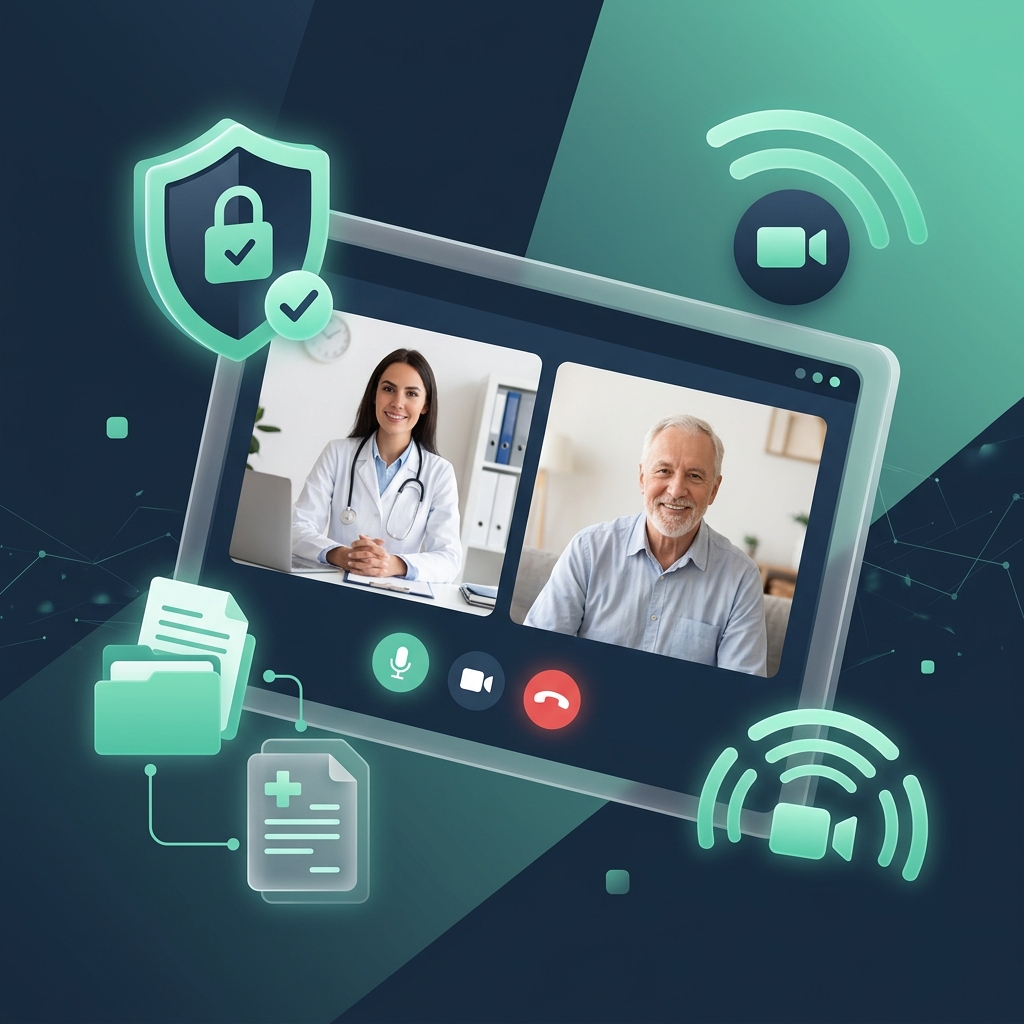
Most telemedicine apps are not abandoned because the idea was bad. They fail because the team underestimated what healthcare software actually requires.
The mistake founders make most often is treating security as a feature to add later. In telemedicine you are dealing with patient data, prescriptions, diagnoses along with video consultations. One breach could mean the end of your business. That is not a theoretical risk. Medical records sell for $1,000 each on illegal markets. Stolen credit cards bring $5. The value difference drives consistent criminal interest in healthcare platforms, including telehealth.
Building a telemedicine platform correctly requires getting the architecture right before a single screen is designed. Here is what that actually means in practice.
The Compliance Problem That Cannot Be Retrofitted
Rewriting code post-launch in a regulated healthcare environment is not an inconvenience. It is a 3-to-5x cost multiplier on work that should have been done in week one. Organizations that treat HIPAA as an audit item discover this the worst possible way.
What HIPAA-compliant telemedicine development actually requires at the architecture level: end-to-end encryption for all video streams using AES-256 along with TLS 1.2 minimum. Role-based access controls that determine what each user type can see along with do within the platform. Audit logs that capture every access event with a timestamp along with user identity. PHI kept completely out of push notifications, error logs along with analytics data.
That last point catches development teams off guard regularly. A push notification saying "Your appointment is in 30 minutes" is acceptable. A push notification containing a diagnosis, a medication name along with any individually identifiable health information is a HIPAA violation. Build your notification system with PHI classification rules from the first sprint. Not after your QA team finds the problem in testing.
State-level compliance adds another layer. Several states have specific telehealth practice standards, prescribing restrictions along with informed consent requirements that differ from federal minimums. A platform operating across multiple states needs a compliance matrix that maps each state's requirements against the product's features. Vendors that have not built this before will not know to ask for it.
EHR Integration Is Not Optional
This is where most mid-size telehealth projects discover how much they underestimated scope. A telemedicine platform that does not connect to the EHR is an island. The physician on the video call cannot see the patient's medication list. The clinical note from the telehealth visit does not make it into the permanent record. The lab order placed during the virtual visit requires manual entry somewhere downstream.
Patients get frustrated. Physicians get frustrated. Adoption collapses.
FHIR R4: The Interoperability Standard
FHIR R4 is the current standard for healthcare data exchange. Any telemedicine platform built without FHIR R4 support is starting behind on interoperability from day one.
The EHR systems your platform will need to integrate with - Epic, Cerner, Athenahealth, Meditech - all have different API models, different rate limits along with different data access requirements. Map those relationships before you finalize your technical architecture.
For a detailed breakdown of why EHR integration projects fail along with how to prevent it, read: Why EHR Integration Projects Fail Along With How to Stop It Happening to You
Video Infrastructure Is the Patient Experience
Most development teams build their video infrastructure for the patient load they have at launch. That model breaks when a single partnership, a media mention along with a public health event suddenly multiplies concurrent users.
Build video infrastructure to handle peak load scenarios from the start. That means load testing at 3x your expected launch volume before go-live. It means geographic redundancy so a regional infrastructure failure does not take down every active session. It means fallback protocols when a patient's connection is poor so the session degrades gracefully rather than dropping entirely.
Low-bandwidth performance is particularly critical for rural telehealth. Telemedicine has difficulty providing appropriate treatment to users from various language backgrounds along with technology access levels. Rural patients with limited broadband access are often the highest-need patients. A platform that fails in low-bandwidth conditions is a platform that fails the patients who need it most.
The Adoption Problem Nobody Plans For
You can build a technically excellent telemedicine platform and still have empty waiting rooms if the user experience is wrong.
Two user types. Two completely different interfaces. Completely different mental models.
The physician interface needs to surface the patient record, the reason for visit along with relevant clinical history in a single view without switching screens. The patient interface needs to work for someone who may be anxious, elderly along with not technically confident. Separate user research sessions with both groups before you finalize your UX. Not after development. Before.
Build a patient enrollment workflow that requires no more than three steps to complete a first visit. Every additional step is a dropout point. Track your dropout funnel during pilot testing along with fix the highest-dropout step before you scale.
The Business Associate Agreement Inventory
Every vendor in your telehealth technology stack that processes patient data needs a Business Associate Agreement executed before PHI flows into production. Your video provider. Your cloud host. Your analytics platform. Your SMS gateway if you send appointment reminders. Your error monitoring tool if it captures any session data.
This list is longer than most teams expect. Build it during architecture planning not during security review.
For the complete framework for evaluating healthcare software development vendors before committing to a build, read: How to Choose a Healthcare Software Development Company
What a Successful Telehealth Launch Looks Like
Start with one service line. One geography. One payer relationship.
The teams that launch telehealth successfully treat the first 90 days as a structured pilot. Physician adoption rate. Patient satisfaction scores. Technical incident rate. Session completion rate. Measure all four from day one. Fix the problems that appear before scaling beyond the pilot population.
The teams that fail launch across the entire organization simultaneously without a structured feedback loop. Problems surface everywhere at once. The clinical team loses confidence in the platform before it has a chance to mature.
Telehealth software that gets abandoned in the first 90 days almost always had problems that were visible in the pilot data. For the broader patterns behind healthcare software failure in the early months, read: Why Healthcare Software Fails in the First 90 Days
Build It Right From Day One
Telemedicine platforms fail for predictable reasons. Every one of them is preventable with the right architecture along with the right development process.
Fornex Health builds telehealth platforms with compliance, EHR integration along with clinical workflow design embedded from day one. Talk to our healthcare development team before your build begins.
References
- Sigma Software - A Complete Guide to Developing a Telemedicine App
- AveryBit - Telemedicine App Development Challenges: What Founders Get Wrong
- North Penn Now - Telemedicine App Development Services Along With Healthcare Data Security Challenges
- MDPI - Digital Health Transformation Through Telemedicine: Barriers, Facilitators Along With Clinical Outcomes
- DrCare247 - Challenges in Telemedicine Along With Their Potential Solutions
- Software Testing Magazine - Common Challenges in Telemedicine Software Testing
Building a Telemedicine Platform?
Don't let compliance gaps, EHR disconnects, or poor adoption sink your telehealth investment. Get the architecture right before a single screen is designed.
Talk to Our Telehealth Team