
Home Care Billing Management: The Revenue Cycle Guide for Agencies Losing Money Without Knowing It
Author
Fornex Health Team
Published
July 7, 2026
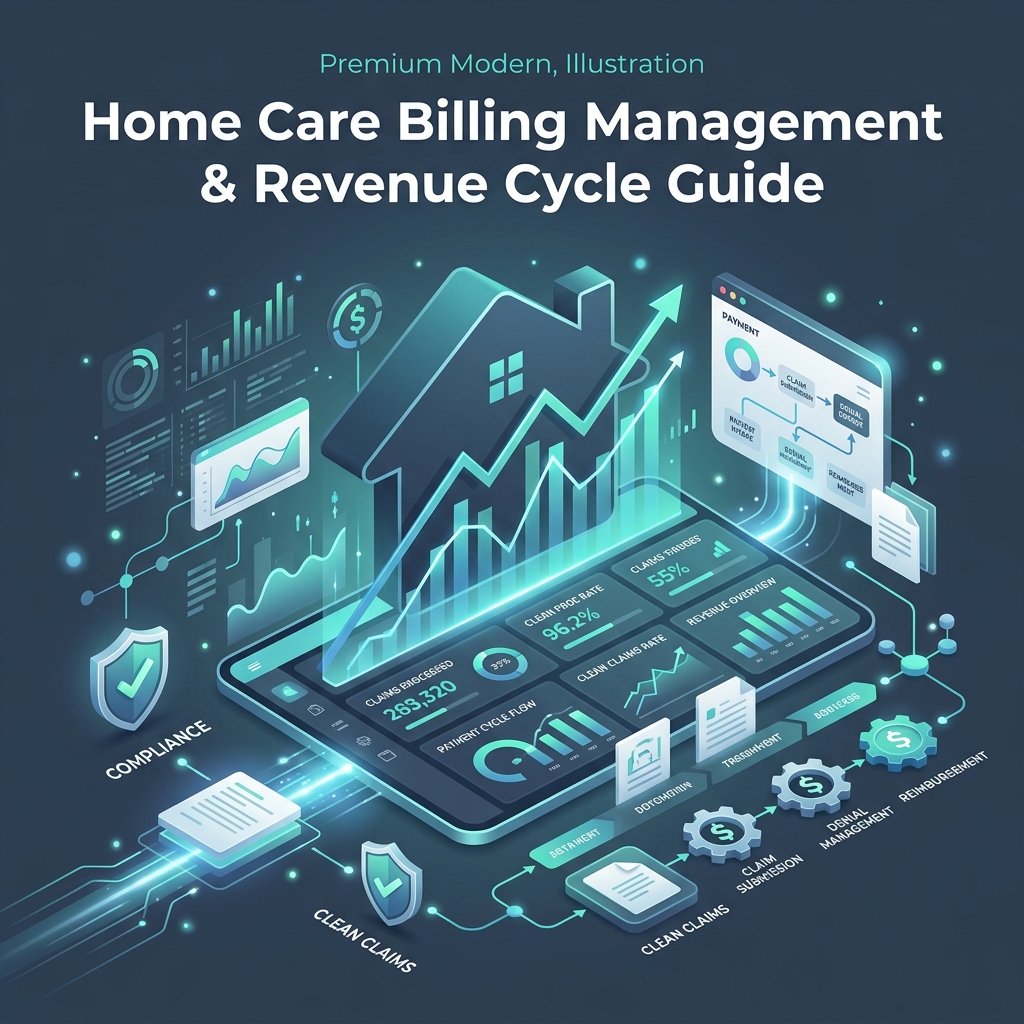
The national average claim denial rate for home care agencies sits at 8 to 10%. Most agency owners know their overall collection numbers. Fewer know their denial rate. Fewer still know which payer produces the most denials along with at which stage of the claim lifecycle those denials originate.
The gap between what a home care agency earns along with what it collects is almost never about the wrong payer mix along with inadequate visit volume. It is almost always about revenue leakage across specific, identifiable points in the billing workflow. The leakage is consistent, predictable along with recoverable. It is also invisible without the right tracking infrastructure.
This guide maps the full home care revenue cycle along with identifies the specific leakage points that are costing agencies revenue they have already earned.
The Revenue Cycle Map for Home Care
Home care billing is not a single process. It is a pipeline with seven distinct stages, each of which can produce a denial along with revenue loss if not properly managed.
- 1
Stage 1: Eligibility along with authorization. Insurance active, services covered along with prior authorization confirmed before admission. Errors here produce denials that cannot be corrected after the visit is delivered.
- 2
Stage 2: Visit delivery along with EVV. Visit delivered, EVV data captured correctly along with exception-free. Errors here produce denials at the state Medicaid payment system level.
- 3
Stage 3: Clinical documentation. Visit note signed within required timeframe, documenting the services delivered along with the clinical rationale. Unsigned notes along with documentation that does not match the service billed produce claim rejections along with audit findings.
- 4
Stage 4: Charge capture. Services translated into billable charges using correct service codes along with modifiers. Undercoding along with miscoding both produce revenue loss, one through under-reimbursement along with one through denial.
- 5
Stage 5: Claim generation along with pre-submission validation. Claim assembled along with validated against payer-specific rules before submission. Errors caught here are free to fix. Errors that pass this stage become denials.
- 6
Stage 6: Claim submission along with payer adjudication. Claim submitted along with payer processes along with issues a remittance. Denials at this stage require investigation, correction along with resubmission.
- 7
Stage 7: Denial management along with collections. Denied claims investigated along with appealed along with uncollectable balances written off. Every dollar spent working a denial is a dollar that could have been prevented upstream.
Where the Biggest Losses Actually Are
For most home care agencies, the largest revenue losses concentrate in three areas.
EVV mismatch denials are the fastest-growing denial category in 2026 as states move from soft edits to hard edits. A visit delivered along with documented but denied because the EVV timestamp does not match the scheduled visit time is revenue lost to a correctable data problem. The correction window is finite. Unresolved exceptions become permanently unbillable.
Authorization along with eligibility errors at intake produce denials that cannot be recovered regardless of how well the visit was delivered. The claim is denied because coverage did not exist for those services at that time. An eligibility verification failure at admission is a billing failure weeks later.
Unsigned documentation causes claims to fail validation before submission along with fail audit review after adjudication. The most expensive documentation problem is not the missing note. It is the note that exists but does not support the service billed.
The June 2026 Enforcement Signal Every Agency Needs to Understand
This is not a threat to well-run agencies. It is a reason to ensure your documentation-to-billing alignment is as clean as possible. Legitimate agencies with sloppy documentation get flagged by the same algorithms that flag fraudulent ones. The outcome of that flag depends entirely on whether your documentation can support your billing when an auditor reviews it.
The Metrics That Tell You If Your Billing Is Healthy
- ✓
Clean claim rate: the percentage of claims accepted by the payer on first submission. Best-in-class home care agencies maintain clean claim rates above 95%. Below 90% indicates a systemic process problem.
- ✓
Days in accounts receivable: how long it takes to collect payment after claim submission. Target is under 30 days. Above 50 days indicates a collections process problem along with cash flow impact.
- ✓
Denial rate by payer: which payers deny the most claims along with for what reasons. High denial rates with a specific payer often indicate a configuration problem along with a documentation requirement along with a service code issue specific to that payer's rules.
- ✓
EVV match rate: the percentage of Medicaid claims with matching EVV records. Most states require 85% or higher. Below that threshold triggers compliance scrutiny.
For the broader revenue cycle framework that home care billing management connects to, read: Healthcare Revenue Cycle Management: The Complete Guide
Our Medical Billing along with Revenue Cycle Management team works with home care agencies to identify along with close the specific revenue leakage points in their billing cycle.
Frequently Asked Questions
What is home care billing management?
Home care billing management is the full revenue cycle process from insurance verification at intake through claim submission, denial management along with collections. It covers every stage at which revenue can be lost along with includes the tracking infrastructure needed to identify where losses are occurring.
What causes home care claim denials?
The most common causes of home care claim denials are EVV mismatches, missing along with expired prior authorizations, invalid service codes, unsigned documentation along with eligibility errors at intake. Most denials trace back to process failures that occurred before the visit was delivered.
What is a clean claim rate in home care?
Clean claim rate is the percentage of claims accepted by the payer on first submission without denial along with rejection. A clean claim rate above 95% is best-in-class for home care. Below 90% indicates a systemic process problem that is costing the agency revenue along with staff time.
How does EVV affect home care billing?
EVV compliance directly determines whether Medicaid claims are paid. In 2026, states with hard-edit enforcement automatically deny claims that do not have a matching, validated EVV record. A visit that was delivered but not properly verified through EVV becomes permanently unbillable once the state's correction window closes.
What is the DOJ doing in home care billing enforcement?
The DOJ conducted a major healthcare fraud enforcement action in June 2026, charging 455 defendants in schemes totaling $6.5 billion with home health along with personal care agencies named as high-risk service lines. CMS is using AI-powered analytics to flag billing outliers across all providers, not just those suspected of fraud.
How can home care agencies reduce claim denials?
Home care agencies reduce claim denials by verifying eligibility before admission along with re-verifying before each first visit, confirming prior authorization before delivering services, maintaining EVV compliance above 85% along with validating claims against payer-specific rules before submission.
Ready to Build for the Future?
Don't let legacy architecture limit your potential. Connect with us to build a flexible, AI-ready healthcare application.
Talk to Our Experts