
Home Care Patient Intake: The Complete Operational Guide for Agencies
Author
Fornex Health Team
Published
July 4, 2026
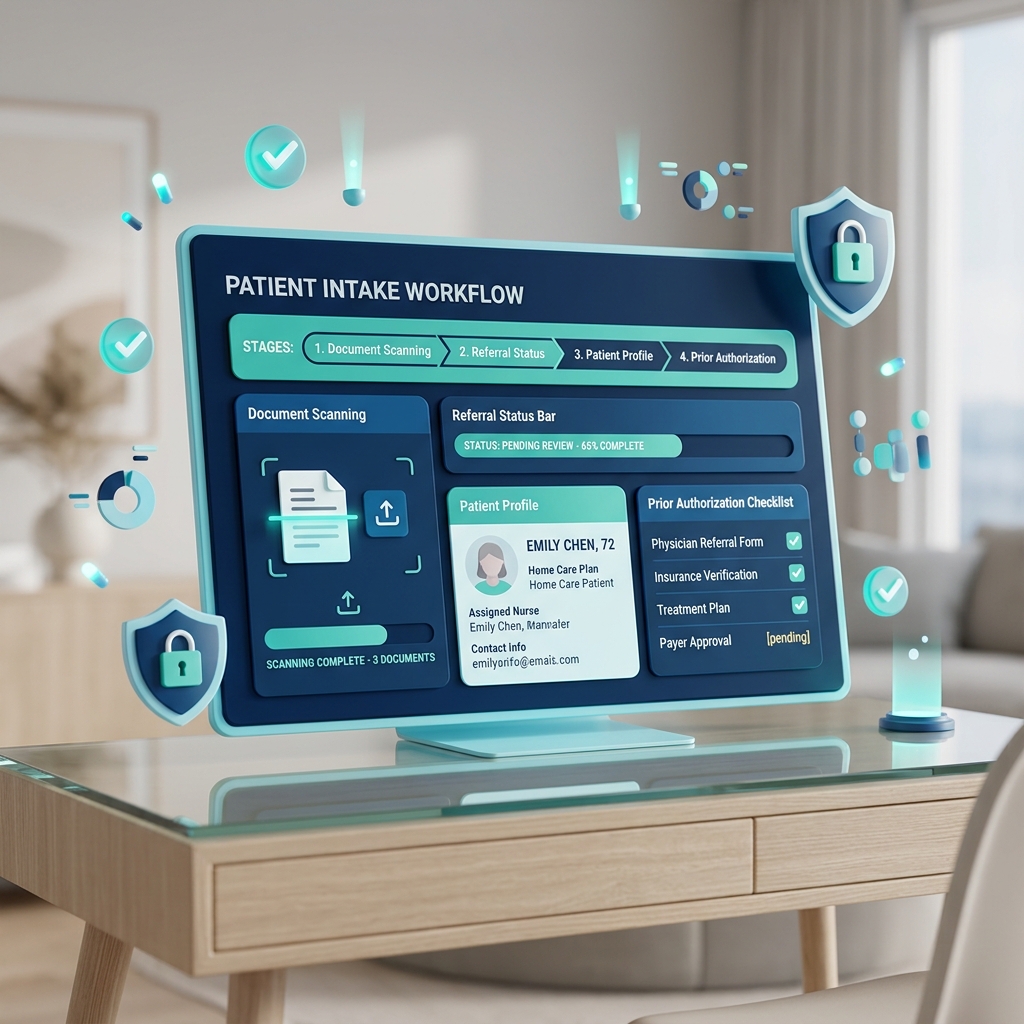
Quick answer: Between 30% and 65% of home care referrals arrive incomplete. A single transcription error, eligibility failure, or prior authorization gap directly causes delayed care, billing issues, and lost agency revenue. Restructuring the intake pipeline and leveraging automated workflows is the most effective operational lever to improve conversion rates and eliminate manual processing overhead.
A patient who never converts from referral to admission never generates revenue. Neither does the caregiver dispatched to a visit that cannot be billed because the intake documentation was wrong.
These are not edge cases. Industry data shows that 30 to 65% of referral information is missing or never reaches the receiving office. Every incomplete referral that lands in an intake coordinator's queue is either a delay, a denial in progress, or an admission that gets abandoned because the paperwork chase takes too long.
Patient intake is where the entire revenue cycle starts. Get it wrong here along with every downstream process — care planning, scheduling, billing along with compliance — inherits the damage.
This guide walks through every stage of the home care intake process along with the specific decisions that determine whether referrals convert reliably into compliant, billable admissions.
What Home Care Patient Intake Actually Covers
Home care patient intake is the full operational sequence from the moment a referral arrives to the moment a patient is admitted along with care begins. It is not just a form. It is a multi-stage pipeline that touches clinical, administrative along with financial functions simultaneously.
The stages are: referral capture, eligibility verification, prior authorization, face-to-face documentation review, clinical assessment, care plan development, scheduling along with start-of-care execution.
Each stage has a specific failure mode. Each failure mode has a downstream cost. Most agencies do not track which stage is failing most often. They experience the outcome — a denied claim, a delayed start-of-care, a frustrated referral source — without a clear view of where the process broke down.
The first step toward fixing intake is building visibility into each stage separately. A blanket "intake is slow" diagnosis leads to blanket interventions that fix nothing specifically.
Where Revenue Actually Leaks in Intake
Revenue leakage in home care intake is concentrated in the first three stages before care ever begins.
Referral capture gaps happen when referrals arrive through multiple channels — fax, phone, email along with portal — without a unified capture process. Referrals received by fax on a Friday afternoon and processed Monday morning are referrals that aged out while a competing agency responded within the hour. The agencies with the strongest referral conversion rates respond to every referral within 60 minutes regardless of channel. That is a technology along with process problem, not a staffing problem.
Eligibility verification failures happen when insurance status is confirmed at intake but not re-verified before the start of care. A patient whose Medicaid coverage lapsed between referral along with first visit is a patient whose first week of visits cannot be billed. Eligibility should be verified at referral capture along with again 24 to 48 hours before the first scheduled visit. For high-frequency services, a weekly re-verification cycle is standard practice in agencies with low denial rates.
Prior authorization gaps are the single most common root cause of home care claim denials. Missing face-to-face documentation, expired authorizations along with service code mismatches between what was authorized and what was delivered all originate in intake decisions. A Bridge Home Health case study found that automating the referral intake process delivered an 80% increase in referral conversion along with eliminated the equivalent of 7 full-time positions of manual processing work. The lever was not hiring more intake staff. It was building a process that caught authorization problems before admission rather than after the first denied claim.
The Six Data Points Every Intake Must Capture
An admission that moves forward without all six of these creates predictable problems downstream:
Patient Demographics & Insurance
Verified against payer records, not self-reported. A name spelled differently between the referral document along with the payer system generates a Record Not Found error at billing submission.
Physician Orders & Face-to-Face
CMS requires a face-to-face encounter between the patient along with an eligible provider before the start of home health care. Missing F2F documentation is one of the most common reasons Medicare home health admissions fail audit.
Authorization Status Per Payer
Authorized units, authorized service codes along with authorization period. Not a verbal confirmation. A documented authorization number with an expiration date.
Clinical Assessment Data
Functional status, care needs along with clinical history that justify the ordered services. Thin assessment documentation at intake creates care plans that cannot be defended in a medical necessity review.
Scheduling & Caregiver Match
Preferred visit times, language requirements along with any patient-specific caregiver qualifications required by the care plan.
Consent & Emergency Contacts
Signed consent for treatment along with HIPAA authorization before the first visit. Missing consents create audit exposure and, in some states, billing exposure.
The Technology Gap Most Agencies Have Not Closed
An intake coordinator manually transcribing information from a faxed referral document into an agency management system is performing a data entry task that introduces transcription errors, takes 15 to 30 minutes per referral along with cannot scale as referral volume grows. The same process handled by an AI-assisted intake system takes under 5 minutes from document receipt to structured intake summary ready for clinical review.
The agencies that have closed this gap are not using intake automation to remove clinical judgment from the process. They are using it to remove the administrative work that delays clinical judgment. The coordinator who used to spend 20 minutes transcribing a referral now spends 5 minutes reviewing an AI-generated summary along with making the admission decision. That 15-minute difference per referral, compounded across hundreds of weekly referrals, is a material operational advantage.
For agencies evaluating what happens after intake and how software failures in the early months of deployment create downstream problems, read: Why Healthcare Software Fails in the First 90 Days.
If your agency is working through intake process design along with the technology infrastructure that supports it, our Healthcare Software Development team has worked with home care agencies on exactly this kind of intake-to-billing workflow architecture.
Frequently Asked Questions
What is home care patient intake?
Home care patient intake is the full operational process from the moment a referral arrives to the moment a patient is admitted along with care begins. It covers referral capture, eligibility verification, prior authorization, clinical assessment, care plan development along with start-of-care scheduling.
What information is needed for home care intake?
Home care intake requires patient demographics verified against payer records, physician orders along with face-to-face documentation, prior authorization details including authorized units along with service codes, clinical assessment data, scheduling requirements along with signed consent documentation.
Why do home care agencies lose referrals?
Home care agencies lose referrals because of slow response times, missing documentation that cannot be resolved quickly, eligibility verification delays along with intake processes that rely on manual fax handling. Agencies responding to referrals within 60 minutes convert significantly more referrals than those processing them the next business day.
What is face-to-face documentation in home care intake?
Face-to-face documentation confirms that the patient had an in-person encounter with an eligible physician or practitioner before the start of home health care. CMS requires this documentation for Medicare home health admissions. Missing face-to-face documentation is one of the most audited along with denied elements in home care billing.
How long should home care intake take?
Best-practice home care intake should move from referral receipt to admission decision within 24 to 48 hours for standard referrals. Time-sensitive referrals from hospitals should be processed within hours. Agencies using automated intake tools report reducing intake timelines from several days to under 4 hours for complete referrals.
What is the biggest cause of home care claim denials at the intake stage?
Missing or expired prior authorizations are the biggest cause of home care claim denials originating in intake. The authorization gaps that generate denials are almost always detectable at intake if the right validation steps are in place before admission.
References
- AutomationEdge — Referral Intake Automation for Faster Patient Intake (May 14, 2026)
- SageCare AI — AI Intake Software for Home Care: Complete Guide (March 25, 2026)
- AutomationEdge — AI in Home Healthcare: The Complete Guide (March 25, 2026)
- CareVoyant — Overcoming Home Care Agency Challenges (May 7, 2026)
Ready to Build for the Future?
Don't let legacy architecture limit your potential. Connect with us to build a flexible, AI-ready healthcare application.
Talk to Our Experts