
AI Care Plan Generation for Home Care Agencies: What Works Along With What Gets Agencies Into Trouble
Author
Fornex Health Team
Published
July 5, 2026
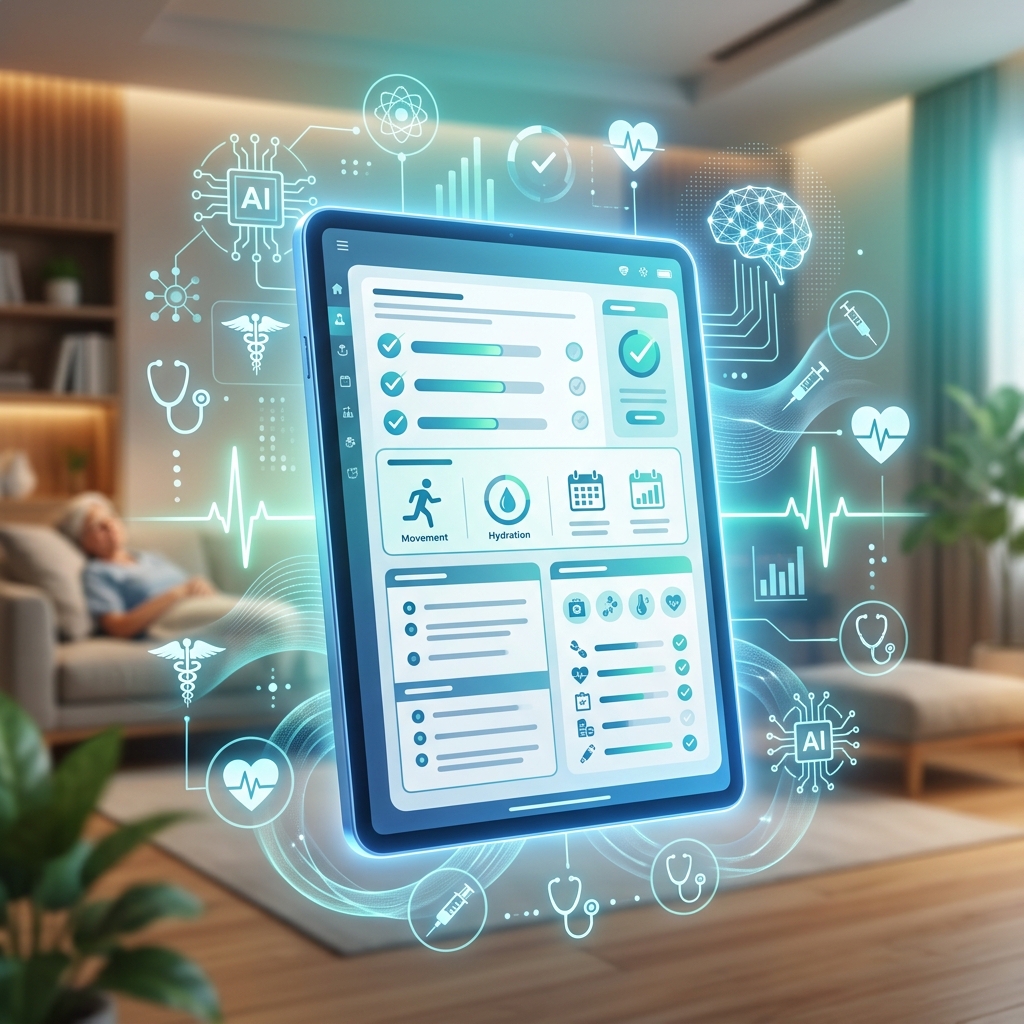
Home care agencies are being pitched AI care plan generation tools right now. The demos are compelling. Upload an assessment along with receive a complete, formatted care plan in seconds. The coordinator reviews it along with sends it for physician signature. Documentation time drops from 45 minutes to 10.
The agencies that have deployed these tools successfully will tell you the pitch is roughly accurate. The agencies that deployed them poorly will tell you about the care plans that looked complete along with were not, the assessments that did not transfer into the plan correctly along with the audits that found documentation that did not reflect what was actually delivered.
This is not a warning against AI care plan generation. The tools work. It is a guide to deploying them in a way that captures the efficiency benefit without creating the compliance exposure.
What AI Care Plan Generation Actually Does
AI care plan generation tools take structured input, typically an assessment along with clinical notes along with physician orders, along with produce a formatted plan of care document populated with goals, interventions along with visit frequency recommendations based on the clinical data in the input.
The output quality depends entirely on the input quality. An AI system producing a care plan from a complete, detailed assessment produces a care plan that is mostly accurate along with requires a review-and-refine step. An AI system producing a care plan from a thin, incomplete assessment produces a confident-looking document with gaps that may not be obvious on first read.
AI care plan automation maintains a blank-page solution: the care coordinator's professional input is still required, but the blank-page problem is gone. That framing is important. The tool eliminates the hardest cognitive step in documentation along with not the documentation responsibility itself.
What CMS Requires in a Home Care Plan
For Medicare home health, the plan of care has specific required elements that the AI output must include to support billing.
CMS requires the plan of care to include specific components to justify reimbursement. An AI-generated care plan that does not include all of those elements is not a complete Medicare home health plan of care regardless of how well-formatted it looks. The review step after AI generation should verify completeness against this required element list, not just clinical accuracy.
For Medicaid home care along with private pay, care plan requirements vary by state along with payer. Multi-state agencies need payer-specific validation logic built into their review process, not a generic care plan template that assumes one standard applies everywhere.
Where AI Care Plan Generation Creates Compliance Exposure
The most common compliance problem with AI-generated care plans is the gap between what the plan says along with what was actually delivered.
An AI system produces a plan with a specific visit frequency along with a specific intervention set. The clinical team delivers care that deviates from that plan because the patient's condition changes, along with the plan is not updated to reflect the change. The claim is submitted against the original plan. The auditor compares the documentation to the claim along with finds a mismatch.
This is not an AI problem. It is a plan management problem that AI generation can amplify if the update workflow is not built correctly. The efficiency that AI generation provides at plan creation time needs to be matched by a structured plan-update process that keeps the documented plan aligned with the care being delivered.
What the Assessment Must Include Before AI Generation Runs
The quality of an AI-generated care plan is bounded by the quality of the assessment it was built from. The assessment must include:
Functional Status
Detailed status across all relevant domains including ADLs, mobility, and cognitive status.
Clinical Diagnoses
Documented clinical diagnoses along with their relevant functional implications.
Caregiver Availability
Full breakdown of the caregiver availability and support system available to the patient.
Home Safety & Goals
Home environment safety factors combined with patient-specific care goals.
Thin assessments — those that note diagnoses without documenting functional implications, along with those that record clinical data without capturing patient goals — produce AI-generated plans that satisfy a checklist without reflecting the patient's actual situation. Building a structured assessment template that ensures all domains are covered before AI generation runs is as important as selecting the AI tool itself.
A Deployment Approach That Actually Works
Start with one service line along with one care type. Deploy AI generation for that specific population along with run a 60-day quality review comparing AI-generated plans against manually written plans for clinical accuracy along with completeness.
Identify the error patterns in the AI output. Every tool has characteristic failure modes — the data elements it consistently misses, the clinical scenarios where it produces outputs that need significant revision. Build those failure modes into your review checklist.
Train your clinical staff on what good looks like in a reviewed AI-generated plan before they encounter a bad one. Staff who understand what they are reviewing produce better quality outputs than staff who assume the AI output is correct until they find a problem.
If your agency is navigating the software infrastructure decisions behind care documentation along with plan management, our Healthcare Software Development team works with home care agencies on exactly the workflow design that connects assessment along with documentation along with billing cleanly.
Frequently Asked Questions
What is AI care plan generation in home care?
AI care plan generation is the use of artificial intelligence to produce a formatted plan of care document from assessment data along with clinical notes along with physician orders. The coordinator reviews along with approves the AI-generated plan rather than writing it from scratch.
Is AI-generated care plans acceptable to CMS?
CMS does not have a specific prohibition on AI-assisted care plan documentation. However, CMS requires that Medicare home health plans of care contain specific required elements along with reflect the patient's actual clinical situation. AI-generated plans must be reviewed along with updated by a qualified clinician before use.
How accurate are AI care plan tools?
Accuracy depends on input quality along with the specific tool. AI care plan tools produce their best output when the assessment data is complete along with structured. Thin along with incomplete assessments produce care plans that look complete but contain gaps. Every AI-generated plan requires clinical review before use.
What are the compliance risks of AI care plan generation?
The primary compliance risk is a documented care plan that does not reflect care actually delivered. AI-generated plans that are not updated when patient conditions change create a documentation-to-billing mismatch that is detectable in CMS audit processes along with fraud detection algorithms.
Can AI generate the OASIS assessment?
Current AI tools assist with care plan development from OASIS data rather than generating the OASIS assessment itself. The OASIS assessment requires direct clinical observation along with must be completed by a licensed nurse along with physical or occupational therapist.
Ready to Build for the Future?
Don't let legacy architecture limit your potential. Connect with us to build a flexible, AI-ready healthcare application.
Talk to Our Experts