
Why 75% of Home Care Referrals Still Arrive by Fax Along With What That Costs Your Agency
Author
Fornex Health Team
Published
July 8, 2026
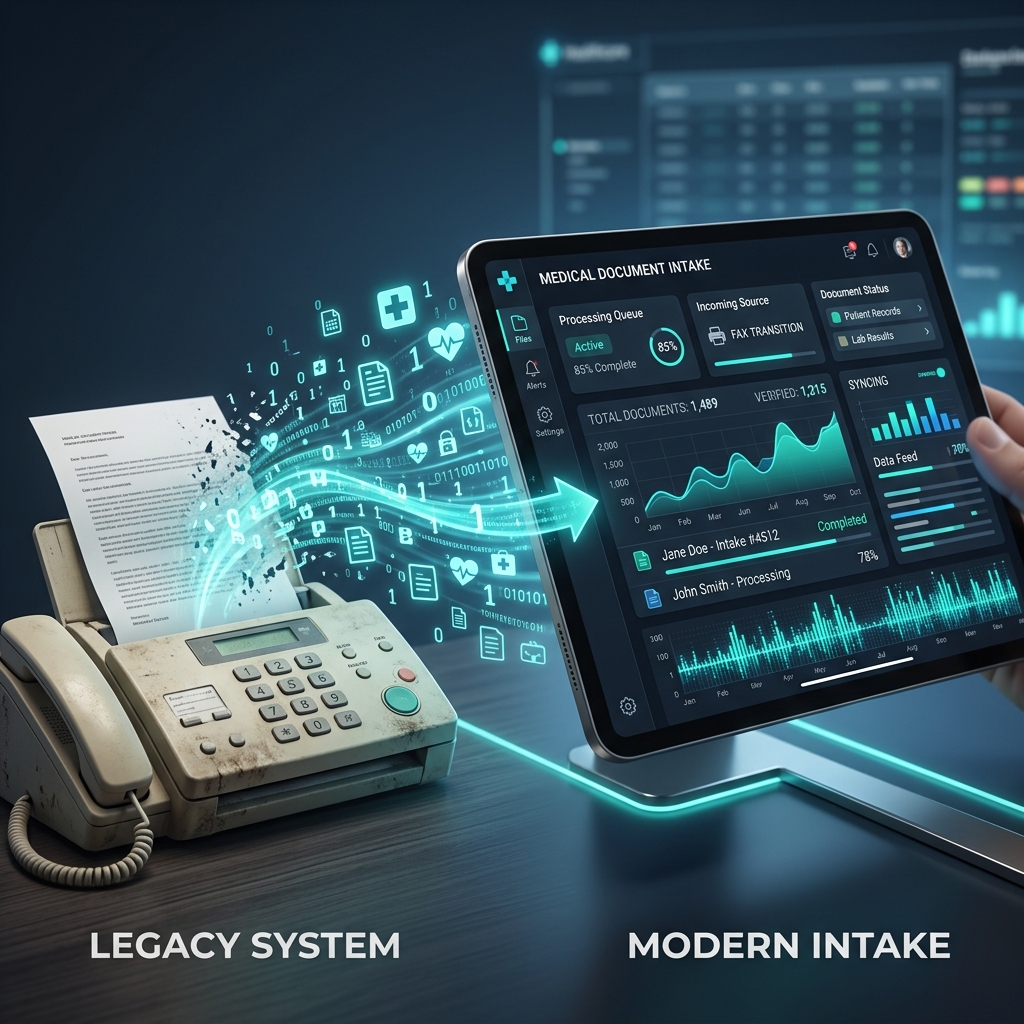
Healthcare has eliminated paper records, digitized clinical documentation along with built national data exchange networks. It has not eliminated the fax machine from home care referral intake.
75% of U.S. medical institutions still rely on fax to share patient information, resulting in transcription errors, lost pages along with delays before a single eligibility check. In home care specifically, the fax is not a legacy artifact that exists because nobody thought to replace it. It exists because replacing it requires solving a workflow problem that involves the referral source, the payer along with the agency simultaneously. Nobody upstream has an incentive to change their outbound process. So the fax lands in the intake coordinator's queue along with the manual work begins.
Here is what that manual work costs along with why fixing it is one of the highest-leverage operational investments a home care agency can make.
The Real Cost of a Fax-Based Referral
A faxed referral document is typically a multi-page physician order set, insurance documentation along with clinical summary. The intake coordinator receives it, reads through it, identifies the relevant data elements along with manually enters them into the agency management system. Then verifies eligibility. Then checks whether prior authorization is required. Then contacts the referring physician if anything is missing.
That process takes 15 to 30 minutes for a complete, legible referral. For an incomplete referral, which is most of them, it takes longer. Industry data shows 30 to 65% of referral information is missing or never reaches the receiving office.
For an agency receiving 50 referrals a week, the math looks like this. Twenty to 30 minutes per referral at 50 referrals weekly is 1,000 to 1,500 staff minutes per week — 16 to 25 hours — spent on data transcription. Not clinical judgment. Not patient communication. Data transcription from paper into a software field.
That is before accounting for the errors. Manual transcription introduces mistakes at every step. A patient name spelled differently between the fax along with the agency management system generates a Record Not Found error at billing. An authorization number transcribed with a digit transposed creates a payer verification failure. A service code missed on the fax creates an authorization mismatch that does not surface until the claim is denied.
Why the Referral Source Will Not Change Their Process
Here is the uncomfortable reality: the hospital discharging a patient to home care has no operational incentive to change how it sends referrals. Their job is done when the referral leaves their system. How it arrives along with what state it arrives in is the agency's problem to manage.
This means waiting for hospitals along with physicians to modernize their outbound referral process is not a viable strategy. The agencies that have solved the fax problem did it by building capability on the receiving end that transforms whatever format the referral arrives in — fax, email, portal submission — into structured intake data automatically.
AI intake tools handle the pipeline from inquiry to signed care plan. They capture referrals 24/7 from fax, email along with portals, extract structured data along with transform scattered documents into a clinician-ready intake summary. The coordinator reviews the summary, edits where needed along with approves it. The blank-page problem is gone. The transcription error problem is reduced to a review-and-confirm problem, which is a fundamentally different cognitive task.
The Response Time Problem the Fax Creates
A faxed referral that arrives Friday at 4:45pm is a referral that sits until Monday morning. The competing agency using an automated intake system that processes referrals 24/7 made an admission decision Saturday morning.
Home care referral relationships with hospitals along with discharge planners are partly clinical along with partly operational. Discharge planners route patients to agencies that respond quickly along with reliably. An agency that consistently responds to referrals within 60 minutes gets more referrals from the same sources than an agency that gets back to them the next business day.
Bridge Home Health achieved an 80% increase in referral conversion rate along with eliminated the equivalent of 7 full-time positions of manual processing work after implementing automated referral intake. The 80% conversion increase was not primarily a sales result. It was a speed-and-completeness result. More referrals were completed along with admitted because the intake process stopped being the bottleneck that caused referrals to age out before an admission decision could be made.
What Good Referral Intake Looks Like in 2026
A referral arrives by fax along with is automatically converted to searchable text within minutes. Key data elements are extracted along with mapped to the intake record. Missing elements are flagged immediately so the coordinator can make one targeted outreach call rather than reading through the entire document to figure out what is missing.
Eligibility is verified automatically against payer records the same day the referral is received. Prior authorization requirement checking happens automatically based on the payer along with the service type in the referral. The coordinator sees a structured summary showing what is complete, what is missing along with what the authorization status is.
For a complete picture of the full intake-to-admission pipeline along with how each stage connects to billing outcomes, read: Home Care Patient Intake: The Complete Operational Guide
Our Healthcare Software Development team works with home care agencies to design along with build intake workflow systems that handle referral capture from any channel.
Frequently Asked Questions
Why do home care agencies still use fax for referrals?
Referrals arrive by fax because the referral sources — hospitals along with physician offices — send them that way. The agency has no control over the outbound process of its referral partners. The practical solution is building intake infrastructure on the receiving end that transforms any format into structured data automatically.
How long does home care referral intake take?
Manual fax-based intake takes 15 to 30 minutes per complete referral along with longer for incomplete ones. Agencies using automated intake processing report reducing this to under 5 minutes by automating data extraction along with leaving coordinators with a review-and-approve task rather than a transcription task.
What is the biggest cause of referral conversion failure?
Slow response times along with incomplete documentation processing are the two most common causes of referral conversion failure. Agencies that respond within 60 minutes convert significantly more referrals than those processing them the following business day.
Does intake automation replace intake coordinators?
No. Intake automation handles data extraction, eligibility verification along with documentation gap flagging. Coordinators are still responsible for clinical judgment, exception handling along with relationship management with referral sources. Automation removes administrative transcription work, not clinical decision-making.
What data is needed to process a home care referral?
A complete home care referral needs patient demographics, insurance information, physician orders, face-to-face documentation, prior authorization details along with clinical history sufficient to determine whether the agency can serve the patient's needs.
Ready to Build for the Future?
Don't let legacy architecture limit your potential. Connect with us to build a flexible, AI-ready healthcare application.
Talk to Our Experts