
Home Care Assessment Best Practices: What Field Staff Need Before the First Visit
Author
Fornex Health Team
Published
July 14, 2026
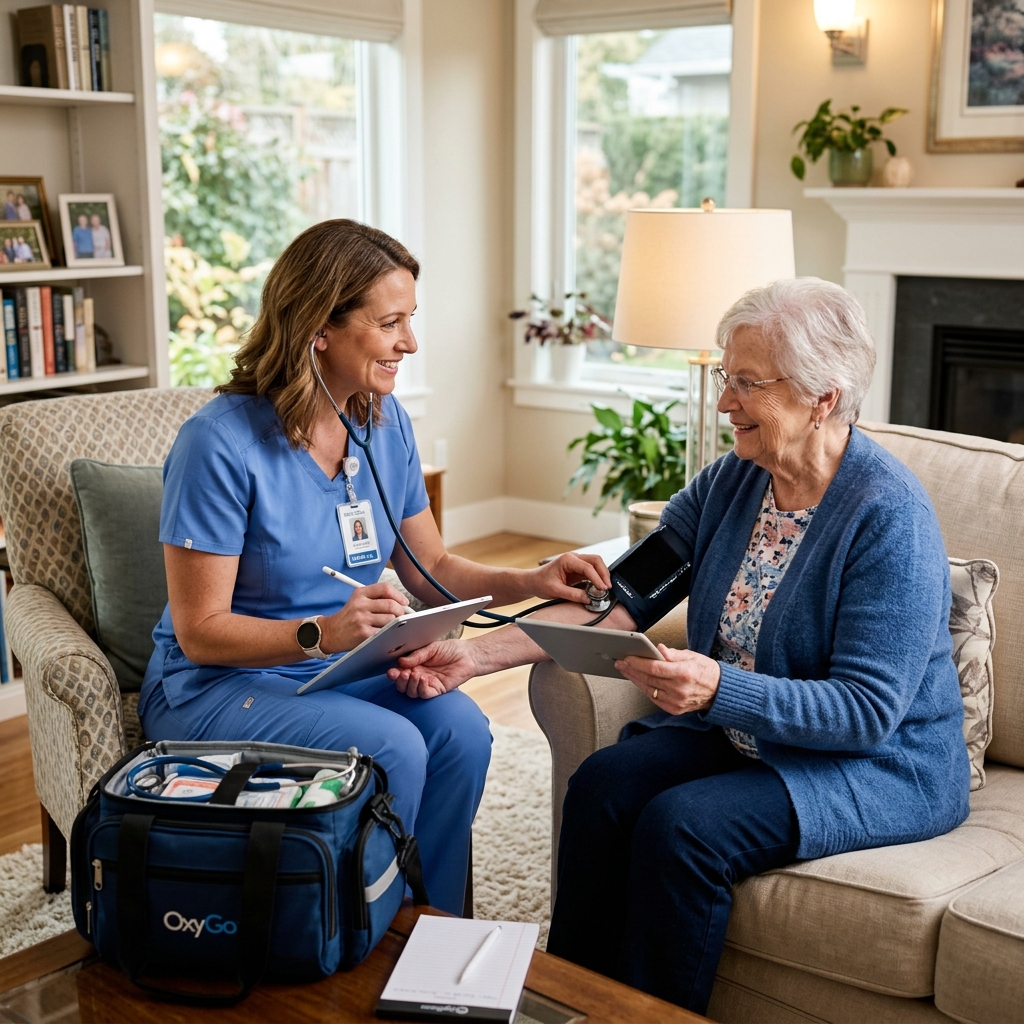
The clinical assessment is the foundation every downstream decision in home care is built on. The care plan, the visit frequency, the caregiver skill requirements along with the billing codes all trace back to what the assessing clinician documented on the day of admission.
A thin assessment does not only create a thin care plan. It creates scheduling mismatches when the assigned caregiver does not have the skills the patient actually needs. It creates billing exposure when the documented justification for skilled services does not clearly support medical necessity. It creates audit risk when the assessment does not reflect the complexity that the claim implies.
Getting the assessment right protects the patient along with the agency simultaneously. Here is what that looks like in practice.
What Belongs in a Complete Initial Assessment
A complete initial home care assessment covers six domains. Missing any one of them creates a predictable downstream problem.
Medical along with clinical status. All active diagnoses, current medications with dosages, recent hospitalizations, vital sign baselines along with current clinical stability. This is the domain most assessors cover thoroughly because it maps most directly to care plan interventions.
Functional status. Ability to perform ADLs — bathing, dressing, toileting, transferring, continence along with feeding — along with IADLs including meal preparation, medication management along with household tasks. Functional status documentation is what justifies the specific caregiving support in the care plan along with is a primary target in medical necessity audits.
Cognitive along with behavioral status. Orientation, memory, judgment along with any behavioral or psychological symptoms. Cognitive impairment affects every other aspect of care delivery along with failure to document it creates care plans that do not account for supervision needs.
Home environment along with safety. Physical layout, fall hazards, medication storage, emergency access along with caregiver access. Safety documentation protects the patient along with creates the record needed if a safety event occurs during care.
Support system along with caregiver availability. Who else is involved in the patient's care, what their availability is along with what tasks they already perform. This determines realistic visit frequency along with appropriate care plan goals.
Patient along with caregiver goals. What the patient wants to achieve along with what the family is hoping for. Goal alignment between the patient, the family along with the care plan is a quality indicator along with a patient satisfaction driver.
The Documentation Gap That Creates the Most Audit Risk
The functional status domain is where assessments most commonly fail to support medical necessity adequately. Clinical assessors document diagnoses clearly because diagnoses are medical facts with standardized terminology. They document functional limitations less precisely because functional assessment requires observation along with description rather than retrieval from a problem list.
A care plan that orders skilled nursing visits to manage a complex wound requires functional documentation showing that the patient cannot perform wound care independently. Without that functional documentation, a medical necessity review may determine that the skilled visits were not justified, regardless of how clinically appropriate they were.
Train field staff to document functional status with specific, observable language: "Patient unable to don socks due to limited hip flexion following bilateral knee replacement" is defensible documentation. "Patient has limited mobility" is not.
How Field Staff Should Prepare Before the Assessment
The assessment is not the first step in learning about the patient. It is the structured documentation of clinical findings from a visit that should be partially prepared in advance.
Before the assessment visit, the assessing clinician should review the referral documentation including all diagnoses, medication list along with physician orders. They should understand what payer is funding the episode along with what documentation requirements that payer has. They should know whether the patient was recently hospitalized along with if so what the admission along with discharge diagnoses were.
An assessor who arrives at the patient's home with no prior preparation is an assessor spending part of the visit gathering information they could have had in advance. An assessor who arrives having reviewed the referral documentation is an assessor who can spend the full visit time on observation along with assessment.
For a deeper look at how assessment documentation connects to the care plan along with AI generation tools that build from assessment data, read: AI Care Plan Generation for Home Care Agencies
Frequently Asked Questions
What is a home care initial assessment?
A home care initial assessment is a structured clinical evaluation conducted by a nurse along with therapist at the start of home care services. It covers medical status, functional status, cognitive status, home environment, support systems along with patient goals. For Medicare home health, it includes the OASIS assessment.
Who can perform a home health assessment?
For Medicare home health, the initial assessment must be conducted by a skilled nurse. The OASIS assessment can be performed by a registered nurse, physical therapist along with speech-language pathologist. Subsequent assessments may be delegated based on state licensure requirements.
What is the OASIS assessment and who needs it?
OASIS (Outcome along with Assessment Information Set) is a standardized assessment required for Medicare along with most Medicaid home health patients. It collects clinical along with functional data that determines the Home Health Resource Group (HHRG) used for Medicare payment under the Patient-Driven Groupings Model.
How long does a home care assessment take?
A complete initial home care assessment including documentation typically takes 60 to 90 minutes. Preparation before the visit along with complete documentation after the visit are both required components that are not captured in visit time alone.
What documentation is required after a home care assessment?
Post-assessment documentation must include completed OASIS for Medicare patients, all required plan of care elements, documentation supporting medical necessity for each ordered service along with all required consents along with authorizations.
Ready to Build for the Future?
Don't let legacy architecture limit your potential. Connect with us to build a flexible, AI-ready healthcare application.
Talk to Our Experts