
Digital Twins in Healthcare: What the Technology Can Actually Do Right Now
Author
Fornex Health Team
Published
June 26, 2026
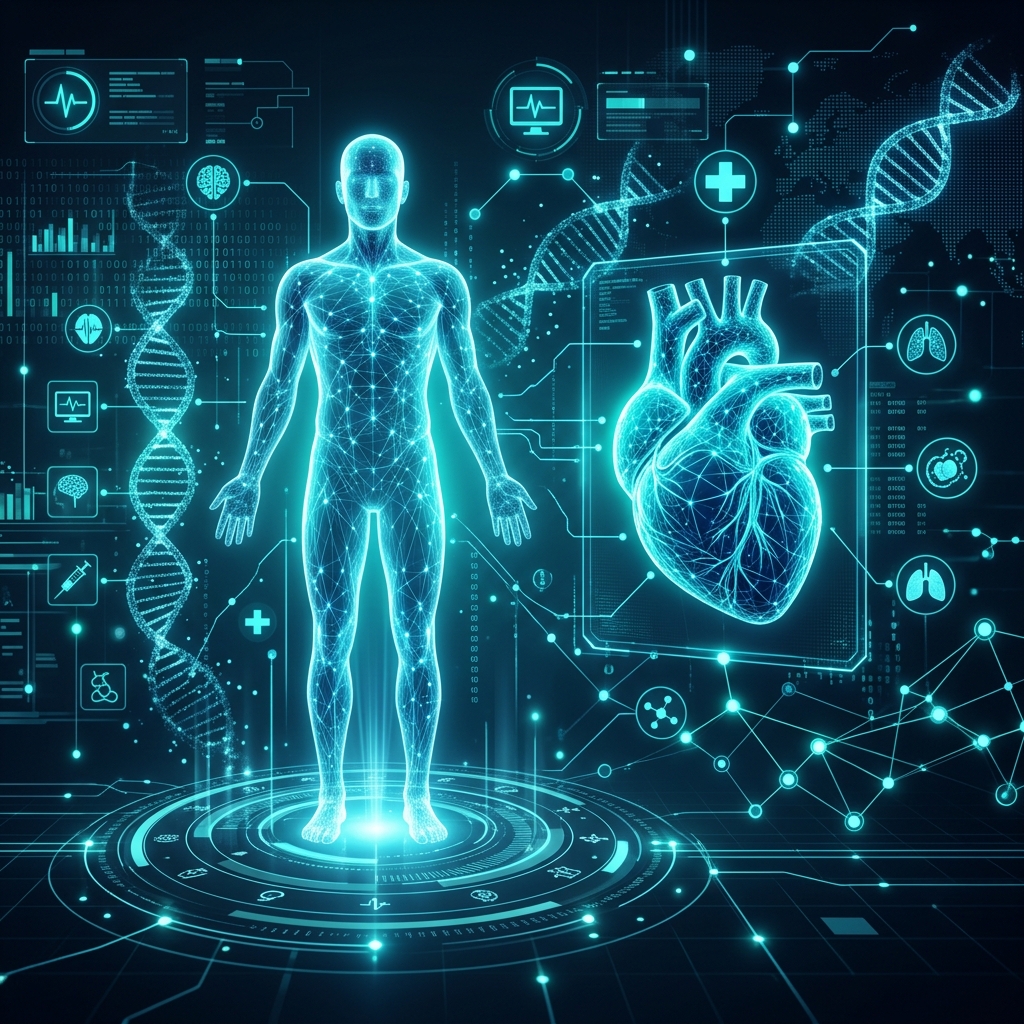
Digital twins are one of the most discussed healthcare technologies of the moment along with one of the least understood. The promise is compelling. A virtual model of an individual patient, built from their genetics, their clinical history along with their real-time biometric data, that predicts how they will respond to a treatment before that treatment is ever administered.
The reality is more complicated. In the race to build digital twins of human patients, computing costs along with data gaps are high hurdles. It is a lot more complex than people had envisioned.
For hospital technology leaders evaluating where to invest, separating the genuine clinical applications already in production from the research-stage concepts still years from clinical deployment matters more than the marketing language attached to either.
What a Digital Twin Actually Is in a Clinical Context
The concept originated outside healthcare entirely. The term "digital twin" was officially coined by NASA in 2002 in the context of product lifecycle management. Healthcare adopted the framework because the underlying idea, building a continuously updated virtual model of a physical system to predict its behavior, applies just as well to a human heart as it does to a jet engine.
What makes healthcare digital twins genuinely difficult is the data requirement. A jet engine produces consistent, structured sensor data. A human patient produces fragmented data across genomics, imaging, wearables, clinical notes along with lifestyle factors, most of it stored in systems that do not talk to each other.
Where Digital Twins Are Already Delivering Clinical Value
The applications furthest along clinically are narrow along with specific, not the comprehensive whole-patient models the marketing language often implies.
Doctors can now rehearse a heart valve replacement using a digital replica of the patient's heart, predicting how the body may respond to the procedure. This is organ-level modeling, not whole-body modeling. It is also genuinely useful: a cardiac surgeon who can simulate a procedure on a patient-specific virtual heart before performing it has a meaningfully better basis for surgical planning than imaging alone provides.
That pharmaceutical application, virtual patient simulation for drug trials, is currently the most mature commercial use case. It is also the use case furthest from hospital bedside care, which means the headlines about digital twin breakthroughs do not always translate into something a health system can deploy today.
The Hospital-Level Application That Is More Immediately Useful
There is a second category of digital twin that gets less attention but offers more immediate operational value for health systems: the digital twin of the hospital itself, not the patient.
This is a more tractable problem than patient-level digital twins because the data is more structured along with the use case does not carry the same clinical risk if the model is imperfect. A hospital that builds an operational digital twin can simulate the impact of adding ten beds to an ICU, changing nurse staffing ratios on a specific unit along with rerouting patient flow during a surge event, before making the actual operational change.
For health systems with constrained capital, this is the digital twin investment most likely to show measurable ROI in the near term, well ahead of patient-level precision medicine applications becoming standard practice.
The Barriers That Keep Patient-Level Digital Twins From Mainstream Deployment
That interoperability requirement is the same foundational problem underlying nearly every advanced healthcare technology initiative right now, from AI clinical decision support to population health analytics to digital twins. A digital twin model is only as good as the data feeding it. If a patient's genomic data lives in one system, their imaging lives in another along with their wearable data lives in a third application that does not connect to either, building an accurate predictive model is structurally difficult, regardless of how sophisticated the underlying algorithm is.
This is why health systems exploring digital twin technology should treat their interoperability infrastructure as the actual prerequisite investment. A FHIR-enabled, fully integrated EHR environment is not a separate initiative from digital twin readiness. It is the foundation digital twins along with most other advanced clinical AI applications require to function with real patient data.
For the integration framework that connects fragmented healthcare data systems into the kind of interoperable infrastructure these advanced technologies depend on, read: Why EHR Integration Projects Fail Along With How to Stop It Happening to You
Health systems building toward this kind of integrated, AI-ready data infrastructure can work with our EHR along With EMR Integration Solutions team. Our complete capabilities are listed at Fornex Health Services.
Frequently Asked Questions
What is a digital twin in healthcare?
A digital twin in healthcare is a virtual, continuously updated model of a patient, an organ along with a healthcare facility built from real data including genomics, imaging, clinical records along with wearable device data. It is used to simulate, monitor along with predict health outcomes along with operational scenarios before they happen in reality.
Are digital twins being used in hospitals right now?
Yes, in narrow clinical applications. Organ-level digital twins are used for surgical planning, particularly in cardiology. Hospital-level operational digital twins are used to simulate staffing along with capacity decisions. Comprehensive whole-patient digital twins remain largely in research along with development stages.
How accurate are digital twins for predicting treatment outcomes?
Accuracy varies significantly by application. Organ-specific models used for surgical planning have shown clinically useful predictive value. Whole-patient predictive models for treatment response remain an active area of research with accuracy that depends heavily on data quality along with completeness.
What data is needed to build a digital twin?
Building an accurate patient digital twin requires genomic data, imaging data, clinical history, real-time biometric data from wearable devices along with lifestyle along with environmental data. The major barrier to building accurate digital twins is that this data typically exists in disconnected systems that do not share information in real time.
How are digital twins different from AI predictive analytics?
Predictive analytics typically uses population-level data to estimate risk or outcomes for a category of patients. A digital twin is a personalized, dynamic model specific to one individual patient or one specific hospital, updated continuously as new data becomes available, rather than a static risk score.
What is the biggest barrier to digital twin adoption in healthcare?
The biggest barrier is data interoperability. Digital twins require integrated, real-time data from multiple disconnected clinical systems. Healthcare organizations without strong EHR integration along with FHIR-based interoperability infrastructure cannot feed digital twin models the complete, accurate data they need to function reliably.
References
- STAT News - Digital Twins in Health Care: Promising Technology Still Years Away (February 24, 2026)
- PMC/NIH - Digital Twins in Personalized Medicine: Bridging Innovation Along With Clinical Reality
- Frontiers in Digital Health - Digital Twin for Personalized Medicine Development
- Frontiers in Digital Health - Multi-Scale Digital Twins for Personalized Medicine (February 16, 2026)
- News-Herald - Top Healthcare Tech Trends for the Year (May 18, 2026)
- PMC/NCBI - Digital Twins in Healthcare: A Comprehensive Review Along With Future Directions
Ready to Build for the Future?
Don't let legacy architecture limit your potential. Connect with us to build a flexible, AI-ready healthcare application.
Talk to Our Experts