
Telehealth Behavioral Health Has Become the Default. Most Practice Infrastructure Has Not Caught Up.
Author
Fornex Health Team
Published
June 28, 2026
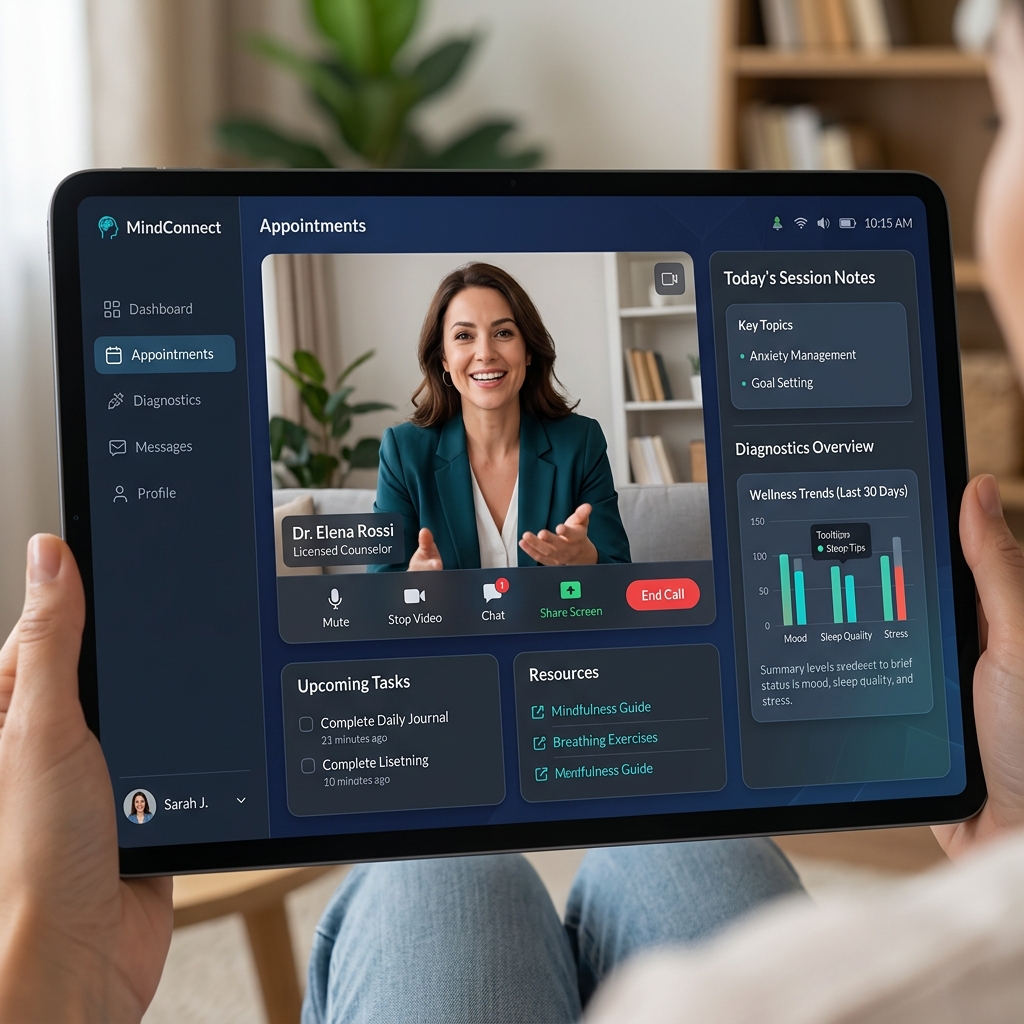
A new dataset released this month confirms what behavioral health providers have suspected for years: virtual care has become the primary delivery model for mental health treatment in the United States, not a pandemic-era accommodation that was supposed to fade.
At the national level, the overall share of patients with a telehealth claim for a mental health condition was 52.1%. That is not a niche use case. That is the majority use case for telehealth as a category.
For health systems along with behavioral health practices, this data confirms that virtual mental health care is not a temporary delivery channel to plan around. It is the primary channel for an entire category of clinical care. Here is what that means operationally.
The Demand Pattern Holding Steady Across Every Demographic
This consistency across age groups is the data point worth paying attention to. The share was proportionally lower among the very youngest along with oldest, 26.9% for children ages 0 to 9 along with 22.0% for adults 65 along with older, but mental health still ranked first in both groups.
A practice that built its telehealth infrastructure assuming behavioral health demand would concentrate in working-age adults is missing a large share of actual demand. Pediatric behavioral telehealth along with geriatric behavioral telehealth both need to be designed for, with the specific usability along with clinical workflow considerations each population requires. A pediatric telehealth visit involves the parent along with potentially the school along with requires different documentation along with consent workflows than an adult psychotherapy session conducted virtually.
Behavioral health visits among commercially insured individuals exceeded primary care visits for the first time, totaling 66.4 million compared with 62.8 million primary care visits, with behavioral health accounting for 67% of telehealth encounters during the same period. That is a structural shift in how mental healthcare is delivered, not a temporary spike.
The Procedure Data That Reveals What Patients Are Actually Using Telehealth For
This breakdown matters for technology along with workflow planning. The dominant use case is ongoing care for established patients, not new patient intake. That means the technology infrastructure supporting behavioral telehealth needs to prioritize continuity of care features: easy rescheduling, consistent provider matching, secure messaging between sessions along with medication management integration, over new patient acquisition funnels. Practices investing primarily in marketing-driven new patient telehealth funnels while underinvesting in the retention along with continuity infrastructure for established patients are misallocating resources relative to where the actual utilization volume sits.
The Billing Complexity That Behavioral Telehealth Volume Creates
High behavioral telehealth volume generates a specific revenue cycle challenge that many practices are not fully equipped for. Psychotherapy billing codes, psychiatric evaluation codes along with medication management codes all carry different documentation requirements along with different payer-specific authorization rules. A practice processing a high volume of behavioral telehealth claims without automated eligibility verification along with claim scrubbing built specifically for behavioral health coding is generating denial rates that a general medical billing system would not.
Telehealth-specific modifiers, place of service codes along with payer-specific telehealth parity rules add another layer of complexity that varies significantly by state along with by payer. A behavioral health practice billing across multiple states needs a system that tracks which telehealth billing rules apply in which jurisdiction for which payer, updated as state-level telehealth parity laws continue to evolve.
For a complete framework on building revenue cycle infrastructure that handles this kind of specialty-specific billing complexity, read: Healthcare Revenue Cycle Management: The Complete Guide for Hospital Administrators
If your behavioral health practice or health system needs revenue cycle infrastructure built for the specific complexity of telehealth along with behavioral health billing, our Medical Billing along With Revenue Cycle Management team builds automation specifically for this kind of high-volume, multi-payer billing environment.
What This Means for Telehealth Platform Investment Decisions
The sustained dominance of behavioral health within telehealth utilization is a strong signal for where platform investment should concentrate. A general-purpose telehealth platform built for any specialty is not optimized for the specific needs of high-volume behavioral health delivery: secure session recording where clinically appropriate, integration with measurement-based care tools like symptom tracking questionnaires along with workflows that support the recurring, long-term relationship between therapist along with patient rather than the episodic, transactional model that works for urgent care telehealth.
Platforms built specifically for behavioral telehealth typically include features general telehealth platforms lack: between-session secure messaging that maintains therapeutic continuity, integrated outcome measurement tools along with scheduling systems designed around recurring weekly or biweekly appointment patterns rather than one-time visits. For organizations building or upgrading telehealth infrastructure with behavioral health as the primary use case, the platform decision should be driven by this utilization data, not by a generic telehealth feature checklist. Build for what 52% of your patients are actually using the platform for.
Frequently Asked Questions
What percentage of telehealth visits are for mental health?
According to the most recent national data, mental health conditions accounted for 52.1% of telehealth claims nationally in Q1 2026, making it the top diagnostic category for telehealth in every region along with every age group in the United States.
Why has behavioral telehealth remained high while other telehealth use has declined?
Behavioral health care is well suited to virtual delivery because most psychotherapy along with psychiatric care does not require physical examination. Many other medical specialties have returned to predominantly in-person care as pandemic-era flexibilities ended, but behavioral health has retained high virtual utilization because the clinical model translates effectively to video-based care.
Is telehealth as effective as in-person care for mental health treatment?
Clinical research generally supports telehealth as an effective delivery model for psychotherapy along with many psychiatric services, particularly for ongoing care of established patients. Telehealth has been especially valuable for increasing access in areas with limited in-person behavioral health provider availability.
What billing codes are used for telehealth behavioral health visits?
Telehealth behavioral health billing typically uses standard psychotherapy along with psychiatric evaluation CPT codes along with telehealth-specific place of service codes along with modifiers. Requirements vary by payer along with by state, particularly regarding telehealth parity laws that govern reimbursement rates for virtual versus in-person care.
Do children use telehealth for mental health care?
Yes. Mental health was the top diagnostic category for telehealth visits among children ages 0 to 9, accounting for 26.9% of claims in that age group, despite being proportionally lower than the national average across all ages, which signals strong demand for pediatric behavioral telehealth access.
What technology features matter most for behavioral telehealth platforms?
The most important features for behavioral telehealth platforms include secure, HIPAA-compliant video, integrated measurement-based care tools for tracking patient outcomes, scheduling systems built around recurring appointment patterns along with secure between-session messaging that supports therapeutic continuity between visits.
References
- Medical Daily - FAIR Health Data Shows 52% of Telehealth Patients Received Mental Health Diagnoses in Q1 2026 (June 2026)
- Fierce Healthcare - US Telehealth Utilization Climbs 10.1% in Q1, Led by Mental Health Visits (June 2026)
- TeleMed2U - Healthcare: The Trends That Will Redefine Care Delivery (December 18, 2025)
- Trilliant Health - Telehealth Demand: An Update After the COVID-19 Pandemic
- Dialog Health - Comprehensive List of Telehealth Statistics
Ready to Build for the Future?
Don't let legacy architecture limit your potential. Connect with us to build a flexible, AI-ready healthcare application.
Talk to Our Experts