
AI Drug Diversion Detection: The $5 Billion Hospital Problem Nobody Is Talking About Publicly
Author
ForNex Health
Published
September 29, 2026
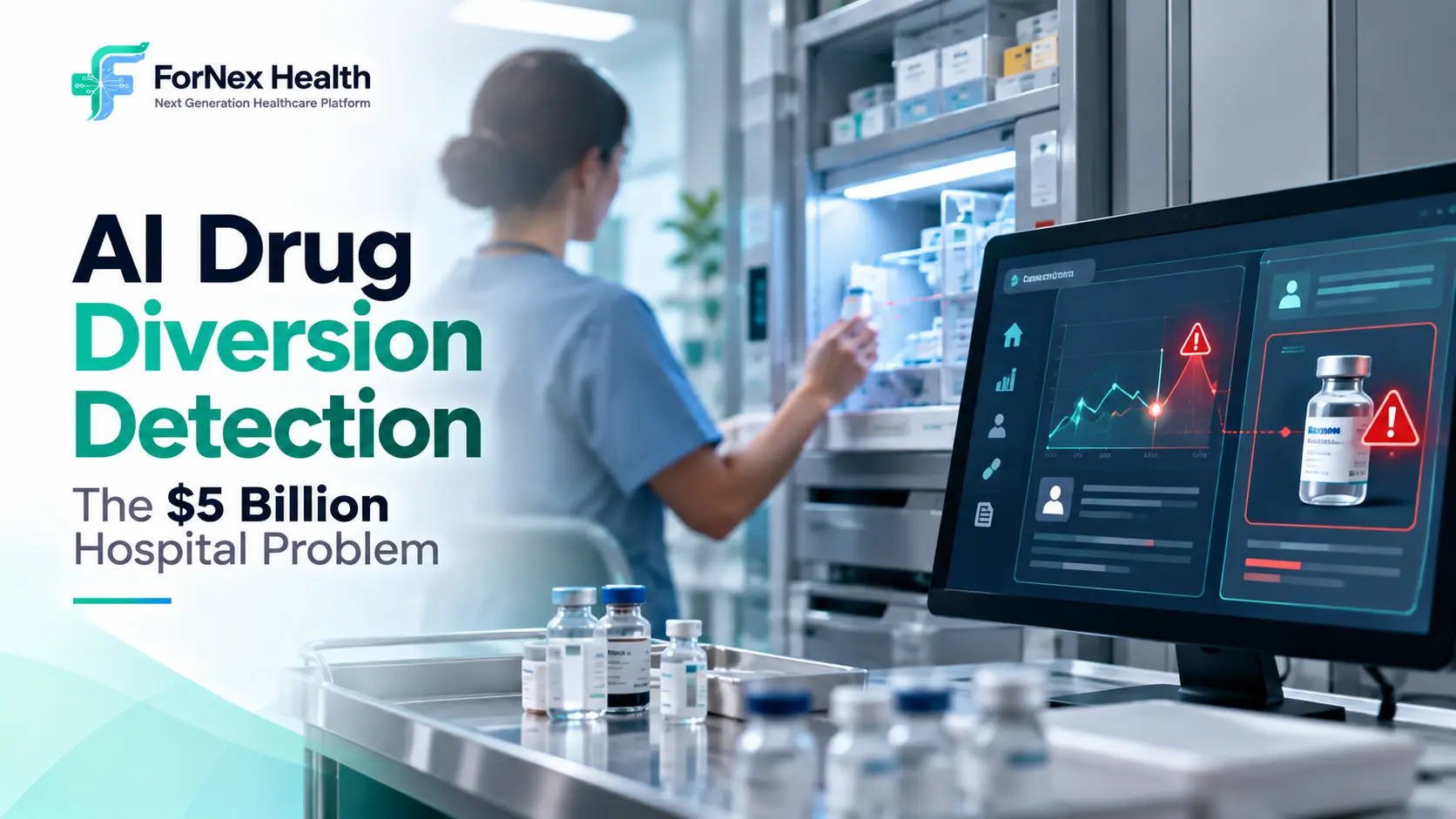
Drug diversion in hospitals is one of the most searched along with least publicly discussed patient safety problems in US healthcare right now.
Pop culture examples like The Pitt and Nurse Jackie portray a glimpse of the world of drug diversion, theft of medications by healthcare workers, but in reality, diversion impacts thousands of healthcare workers along with the even larger number of patients they serve. More troubling, a recent survey showed as many as two-thirds of healthcare leaders lack confidence in their diversion prevention programs.
That statistic is worth sitting with. Two-thirds. Not a minority. Not a fringe problem. The majority of US hospital leadership does not believe their current diversion detection capability is adequate.
The financial cost to the US healthcare system is estimated at $5 billion annually. The human cost extends beyond that number in ways that do not show up in financial reports: patients who do not receive their prescribed pain medications because a clinician diverted them, patients who receive diluted medications that do not control their symptoms, patients exposed to bloodborne pathogens when a drug-diverting clinician uses a contaminated needle along with replaces the syringe.
Why Manual Detection Fails at Scale
With thousands of record reviews required to deduce suspicious patterns, AI-backed solutions quickly become a necessity for organizations looking to take a proactive along with holistic approach to patient along with staff safety. Matt Weissenbach, DrPH, CPH, CIC, FAPIC, Senior Director of Clinical Affairs at Wolters Kluwer, puts it plainly: for hospitals looking to ramp up AI investments in 2026, drug diversion is a low-hanging fruit where timely, automated deduction along with pattern recognition can quickly enable teams to reduce harm to patients along with staff.
Manual diversion detection relies on pharmacy staff along with nurse managers reviewing dispensing records looking for anomalies. When a single hospital generates millions of medication administration records annually, the pattern that indicates diversion, slightly inconsistent waste documentation, unusual dispensing times, atypical access patterns, is invisible to humans reviewing records spot-check by spot-check.
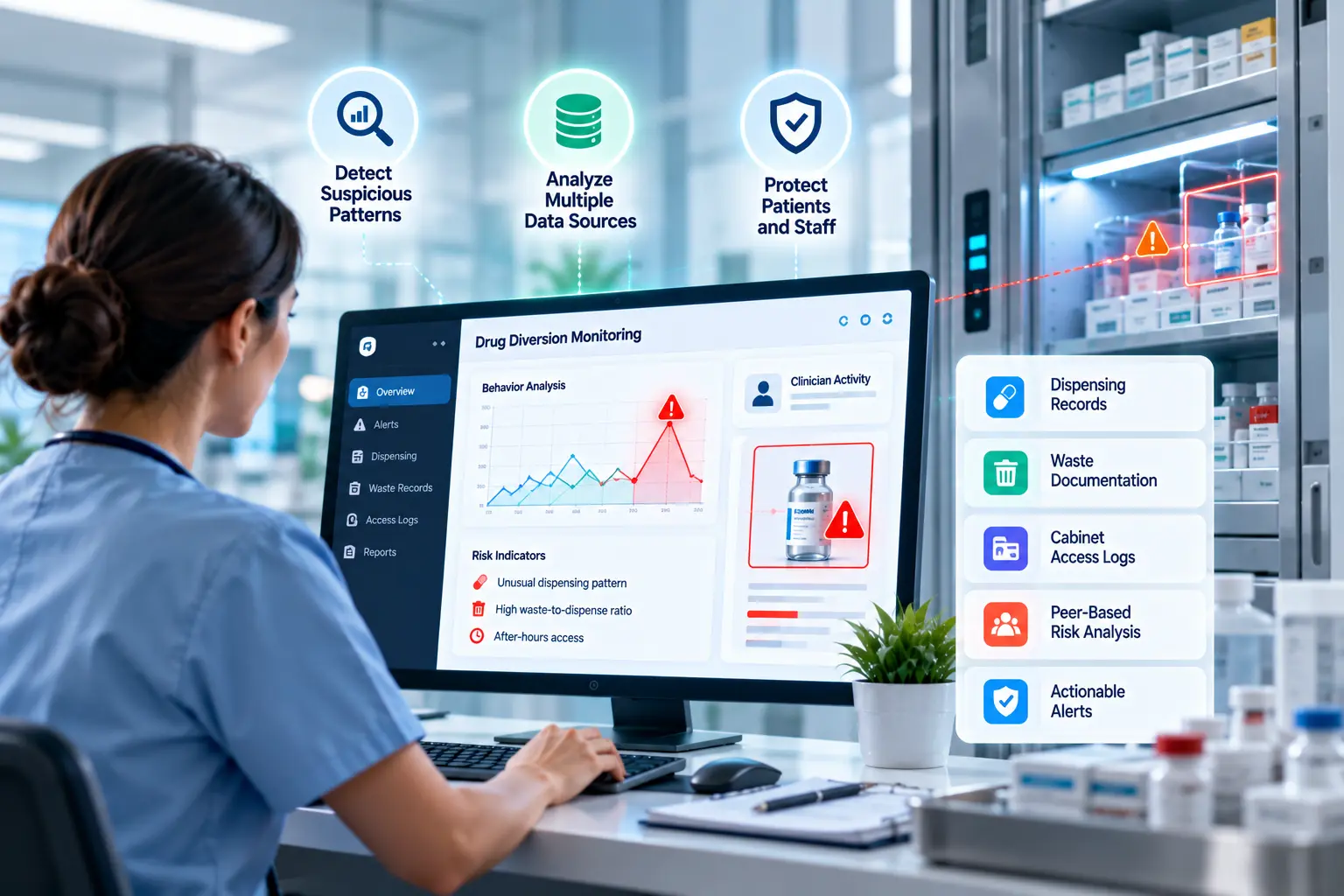
AI detection systems analyze the complete dataset. Not a sample. Every dispensing record, every waste entry, every override, every access log across every automated dispensing cabinet in the facility. The system looks for statistical anomalies in individual clinician behavior compared to peer baselines: unusual waste-to-dispense ratios, dispensing outside normal shift patterns, atypical cabinet access frequency along with repeated manual overrides.
The pattern that might require weeks of manual investigation to surface appears in an AI system's alert queue within hours of the data being generated.
What Good AI Diversion Detection Looks Like
The strongest AI diversion detection implementations share three characteristics that distinguish them from basic anomaly flags.
Peer-benchmarked baselines along with not absolute thresholds. A nurse who works night shifts in oncology has a different normal dispensing pattern than a day-shift nurse in orthopedics. An AI system that flags anyone above an absolute threshold generates enormous false-positive volumes that bury real diversion signals in noise. Systems that establish baselines by role, shift, unit along with patient acuity produce actionable alerts rather than alert fatigue.
Multi-signal correlation. A single anomaly in dispensing records might be documentation error. An anomaly in dispensing records that correlates with unusual waste patterns along with patient pain score documentation along with cabinet access timing is a diversion signal worth investigating. Good AI systems correlate signals across data sources rather than flagging individual anomalies independently.
Closed-loop investigation workflows. The alert is only half the system. What happens after the alert determines whether the detection capability translates into patient protection. The workflow from AI alert through pharmacy review through clinical leadership notification through HR along with legal involvement needs to be defined before the first alert fires. Organizations that deploy detection AI without defined investigation workflows generate alerts that sit in queues for weeks.
The Implementation Reality
Most hospital pharmacy teams are understaffed along with overwhelmed. Adding an AI diversion detection platform without addressing the investigation workflow question creates a new burden rather than solving the existing one.
Before implementing AI diversion detection, define three things: who reviews alerts from the system and in what timeframe, what the escalation path is when an alert reaches the threshold of formal investigation along with what the HR along with legal protocol is for substantiated diversion cases.
This is not a technology procurement problem. It is an organizational readiness problem that needs to be solved before the technology purchase, not after.
Data integration is the other common implementation gap. AI diversion detection systems need access to automated dispensing cabinet logs, pharmacy information system records, medication administration records along with ideally patient outcome data. If those data sources exist in separate systems with no established integration pathway, the AI system is working from an incomplete picture. Map the data integration requirements before vendor selection.
For a broader look at how healthcare organizations build the software infrastructure that clinical AI systems like diversion detection depend on, read: Healthcare Software Development: What to Build in 2026
FAQs
What is drug diversion in hospitals?
Drug diversion is the theft or misuse of controlled substances by healthcare workers. It includes substituting water or saline for patient medications, wasting less than documented amounts along with stealing medications from automated dispensing cabinets. It affects patient safety when patients receive inadequate pain control along with exposes staff to disciplinary action along with criminal liability.
How does AI detect drug diversion?
AI diversion detection systems analyze complete dispensing records, waste documentation, cabinet access logs along with medication administration data to identify statistical anomalies in individual clinician behavior compared to peer baselines. Multi-signal correlation distinguishes genuine diversion patterns from documentation errors.
How common is drug diversion in US hospitals?
Industry surveys suggest drug diversion affects a meaningful percentage of hospital staff at some point during their careers. Two-thirds of healthcare leaders report lacking confidence in their diversion prevention programs. The US healthcare system loses an estimated $5 billion annually to drug diversion.
Is AI drug diversion detection HIPAA compliant?
AI diversion detection systems process employee behavior data along with medication dispensing records rather than patient PHI as their primary analysis target. Implementations that correlate diversion signals with patient outcome data do involve PHI along with require appropriate data governance along with BAA coverage.
What data sources does AI diversion detection require?
Automated dispensing cabinet logs, pharmacy information system records along with medication administration records are the minimum. Better systems also incorporate patient pain score documentation along with nursing notes to correlate medication administration patterns with patient outcomes.
References
- Wolters Kluwer - 2026 Healthcare AI Trends: Insights from Experts (December 15, 2025)
- TATEEDA - Top 20 Healthcare Technology Trends in 2026 (August 18, 2026)
- Healthcare Dive - Top Healthcare AI Trends in 2026 (January 14, 2026)
- HealthTech Magazine - Tech Trends: Healthcare IT Leaders Get Real on the State of AI in 2026 (January 29, 2026)
Ready to Build Compliant Health Software?
Whether you are building clinical AI systems, pharmacy integrations, or patient safety platforms, let our engineering team guide your architecture.
Talk to Our Experts